
Arable farming
Research
The Department of Ecological Agriculture and Crop Production (FÖL) conducts research on how to increase crop productivity while simultaneously improving ecosystem services by harnessing biological processes. Key research areas include the optimization of cropping systems (potatoes and legumes), measures to increase soil fertility, including composting, root ecology, and root-soil interactions; diversification of crop production, e.g., through intercropping and agroforestry; and the integration of biodiversity-enhancing measures into arable farming systems. In addition, the group addresses interdisciplinary and transdisciplinary topics such as studies on the environmental impacts of organic agriculture—particularly with regard to water conservation and nature conservation—social agriculture, and the assessment of the societal impact of research.
The department’s curriculum covers the areas of arable farming and crop production in organic agriculture, soil fertility and nutrient cycles, land-use systems, and the transition of farms to organic agriculture. The department serves as the scientific director of the “Hessische Staatsdomäne Frankenhausen” teaching and research farm and participates in the Hesse Practical Research Network. A lecturer position in organic vegetable production is affiliated with the department, as is the coordination office for biodynamic agriculture, which conducts its own teaching and research activities.
Miriam Athmann heads the Department of Ecological Agriculture and Crop Production in the Division of Ecological Agricultural Sciences in Witzenhausen and is also the scientific director of the Hessian State Estate Frankenhausen Teaching, Research, and Transfer Center.

I am part of the PFN because I understand the importance of practice-oriented research for the transition to a sustainable way of life and economy, and I value the exchange with the farmers and advisors both professionally and personally.
Elias Gruber studied agriculture in Hohenheim and Witzenhausen while living and working on farms. As a research assistant at the University of Kassel, he conducts research on nitrogen losses to the environment and nutrient cycles in organic farming.
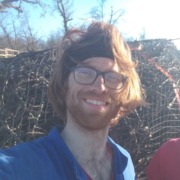
I am part of the PFN because it allows me to combine practical and scientific work. I enjoy working with farmers to develop research questions, conduct experiments, and be there when the results are put directly into practice.
 Scroll to top