What a look beneath the surface reveals
July 1, 2026 | EVENT
Organic farming makes a difference: in the fields, on the farm, and for society
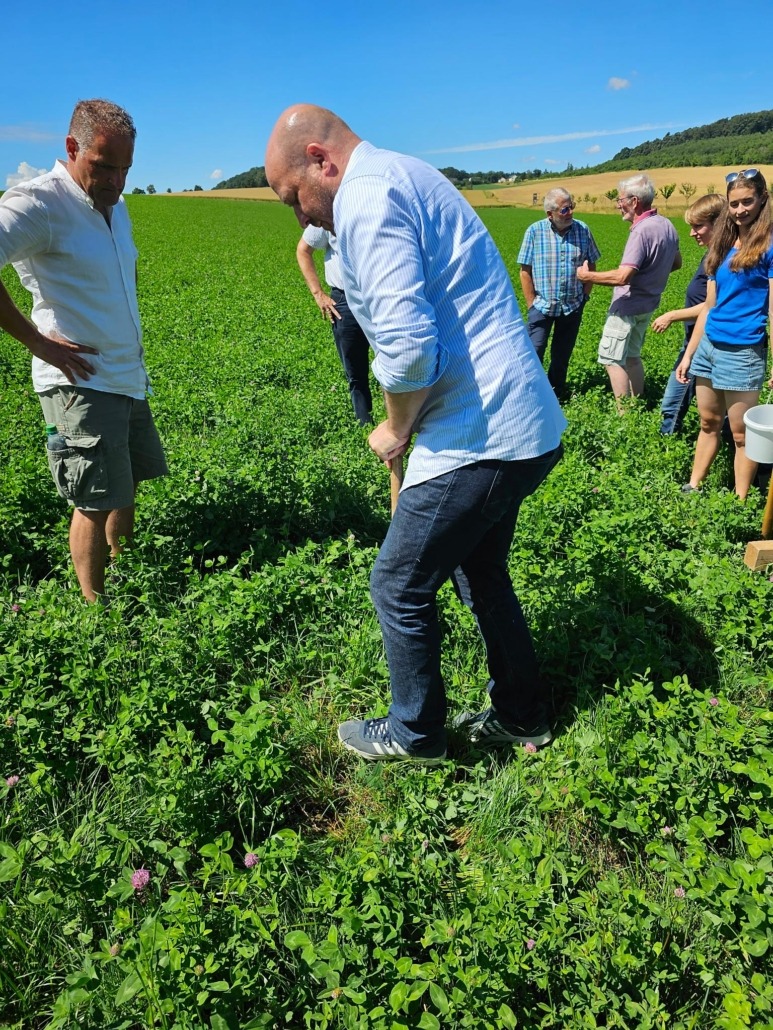
As part of his summer tour, Agriculture Minister Ingmar Jung visits the Capelle Farm to learn about the work of the Hesse Practical Research Network
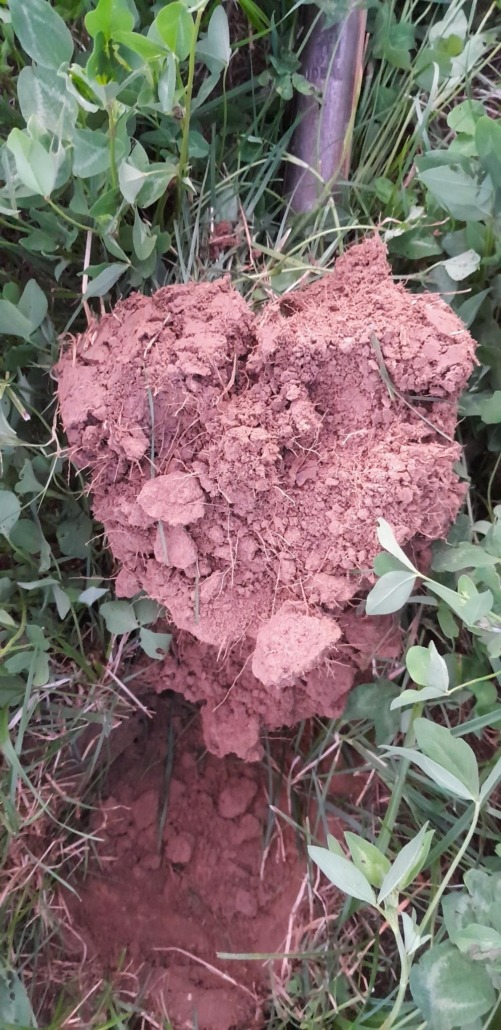
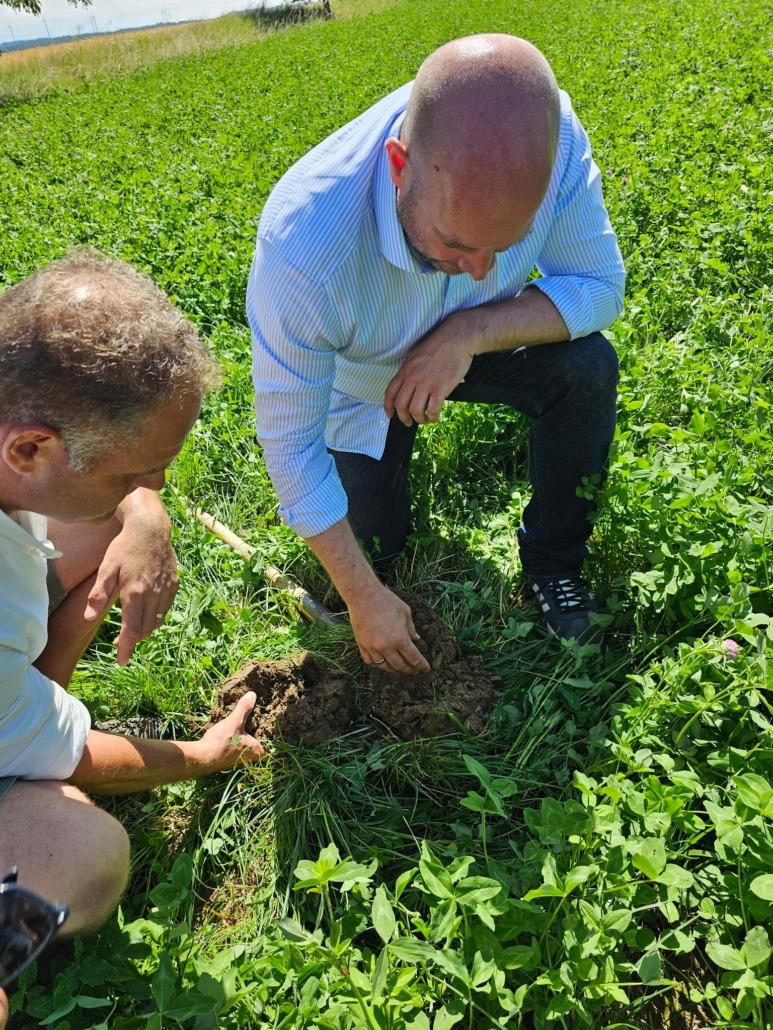
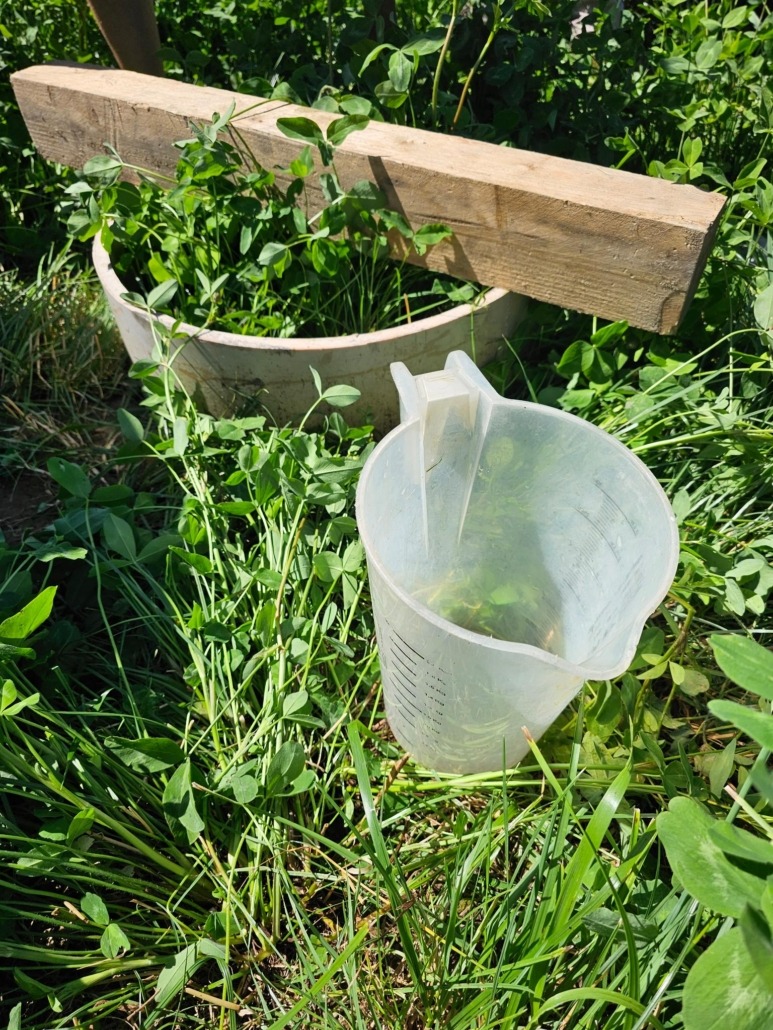
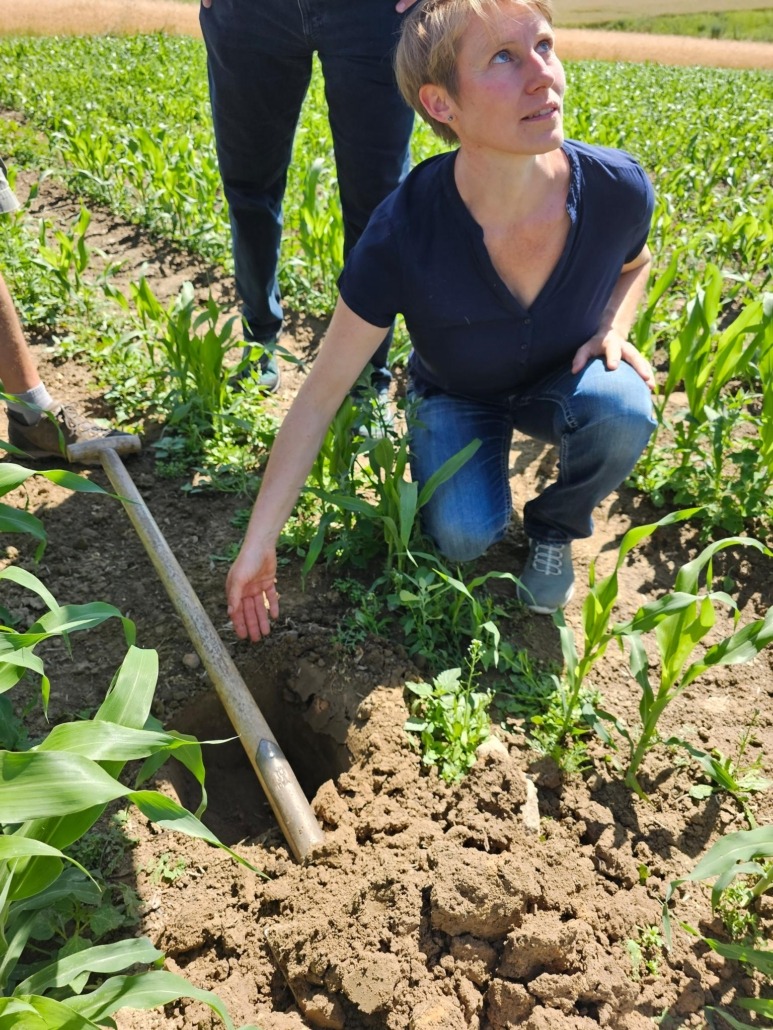
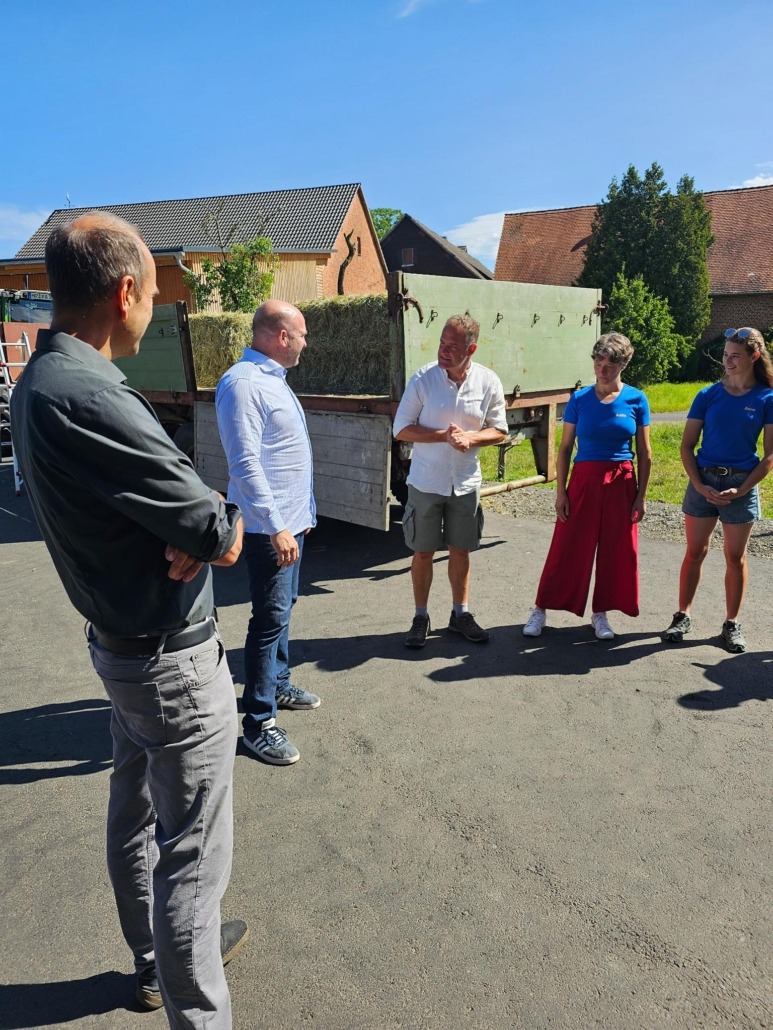
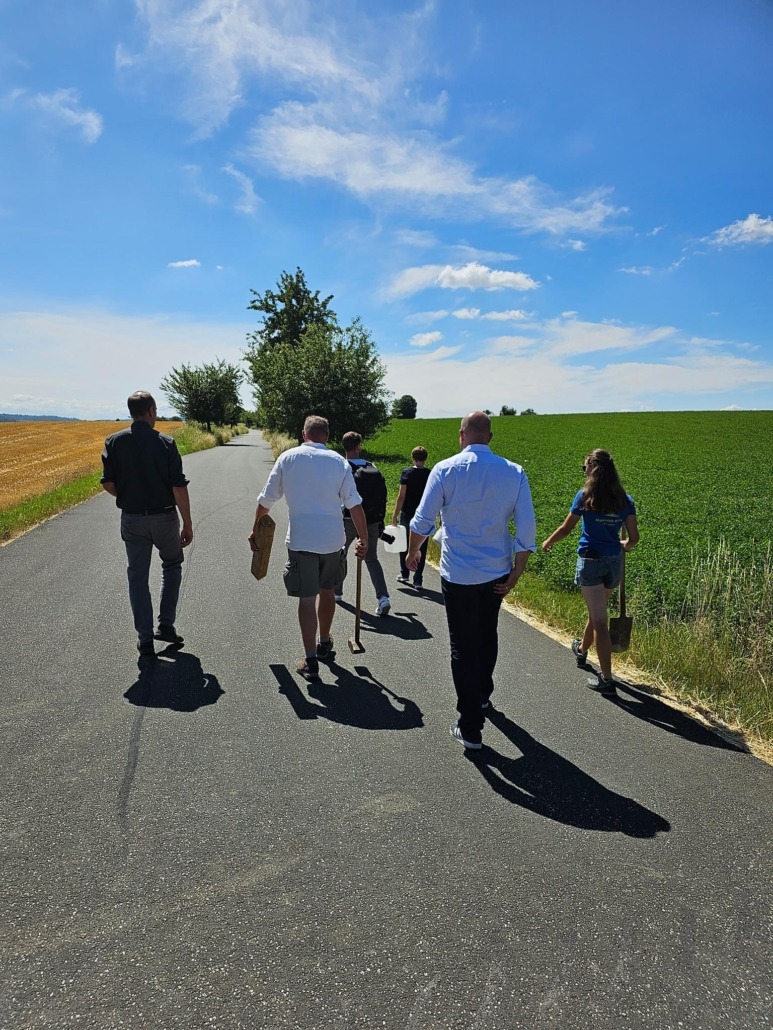
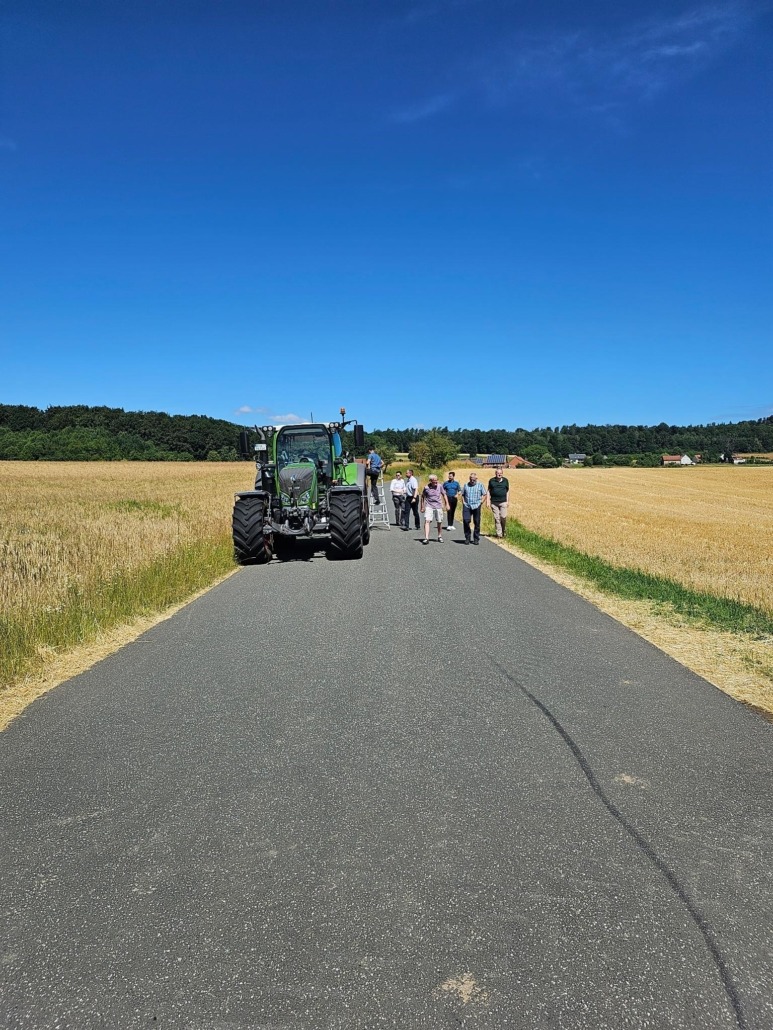
Armed with a spade, watering cans, and an infrared thermometer, Hesse’s Minister of Agriculture, Ingmar Jung, visited the fields of Capelle Farm, owned by organic farmer Peter Arndt. A closer look at the soil made it clear: Organic farming doesn’t just produce high-quality food. It also fulfills important societal roles, ranging from protecting groundwater and promoting soil fertility to climate protection, biodiversity, and regional economic cycles.
However, the farm visit also showed that, in order for farms to be able to provide these services on a long-term basis, they need practical solutions, reliable framework conditions, and policies that collectively strengthen research, extension services, and agricultural practices.
Diverse crop rotations strengthen soils and farms
The Capelle Farm cultivates approximately 225 hectares of cropland and 40 hectares of pasture in accordance with the guidelines of the Naturland organic farming association. All of its land has been farmed organically for the past eight years. Crops grown include clover-grass mixtures, field beans, corn, spelt, oats, wheat, buckwheat, winter barley, lupins, and winter rapeseed.
This diversity is not an end in itself. Diverse crops and crop rotations adapted to local conditions help maintain soil fertility, make better use of nutrients, and make agriculture more resilient to drought, heavy rainfall, and other effects of climate change.
“We’ve been farming sustainably on all our land for eight years now, and I can say this: It’s not just a look at the soil that clearly shows we made the right decision,” explained farm manager Peter Arndt. Especially in light of sharply fluctuating energy prices, the focus on regional cycles is a key component of the farm’s economic success.
Clover-grass plays a central role in this. It improves soil structure, promotes humus formation, fixes nitrogen from the air, and can be used as feed or as a substrate for energy production. Together with two other organic farms, the farm operates a biogas plant that generates electricity and heat for the village of Mölln, a school, an indoor swimming pool, and a firewood drying facility. This creates regional cycles that link agriculture, energy supply, and rural areas.
Social benefits are generated directly at the workplace
Organic farming combines environmental responsibility with economic viability. Through diverse crop rotations, the avoidance of synthetic chemical pesticides, and the establishment of regional nutrient cycles, it provides benefits that benefit society as a whole.
These include protecting soil and groundwater, promoting biodiversity, sequestering carbon, and strengthening regional value creation. At the same time, diverse and adaptable farming systems can help make Hessian agriculture more resilient to crises and climate change.
During the farm visit, Tim Treis, spokesperson for the Association for Organic Farming in Hesse, emphasized that organic farming embodies regionalism in practice—from seeds and fertilizers to the products it yields. The benefits sought by society are firmly anchored in the system and strengthen not only the environment and rural areas but also the sustainability of agriculture.
The PFN Brings Research to the Field
The Hesse Practical Research Network (PFN) is investigating how ecological and economic goals can be reconciled under real-world conditions. The Capelle Farm is a member of the network and actively participates in the development of innovative farming systems.
The PFN’s research questions do not arise solely at a desk. They develop from the specific challenges faced by farms. Farmers, extension agents, and researchers work together to plan experiments, conduct them under real-world conditions, and evaluate the results.
This ensures that research is rooted where its results will ultimately be put to use: in the fields of Hesse, in barns, and in day-to-day farm operations.
Solutions for Drought, Nutrient Loss, and Rising Costs
It is becoming increasingly difficult to plan agricultural decisions. Droughts and heavy rains alternate, inputs are becoming more expensive, and nutrients are becoming scarcer. At the same time, not every measure is equally suitable for every location and every farm.
For this reason, the PFN is conducting research, among other things, on how to ensure yields in vegetable farming, retain nutrients more effectively on the farm, and make agricultural systems more self-sufficient and stable.
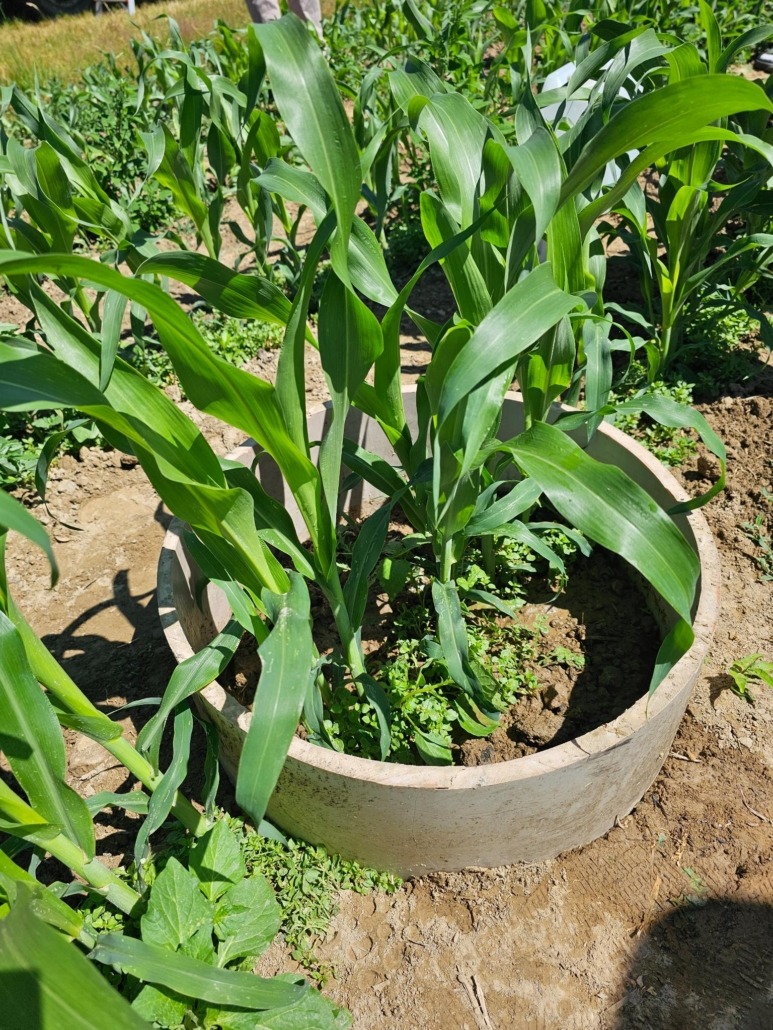
In vegetable farming, research is being conducted to determine how the use of various composts and cover crops improves the soil’s water-holding capacity and infiltration rate or under-seeding, buffer temperature fluctuations, and improve soil fertility. The goal is to keep the soil covered for as long as possible, retain water in the field, prevent erosion, and reduce nutrient losses in order to supply Hesse with high-quality vegetables.
The arable farming group investigated how cover crops and different tillage methods can make bound nitrogen specifically available for the subsequent crop . At the same time, losses in leachate are to be made directly visible on working farms using simple and cost-effective methods . Because only measurable losses can be effectively reduced.
Livestock farming is also being integrated into the circular economy. In swine farming, the network is investigating how protein-rich clover-grass silage can be usedas an on-farm source of protein. This could reduce the need to purchase additional feed and give the clover-grass silage added economic value. Species-rich legume-grass mixtures are also intended to demonstrate whether more diverse stands react more stably to drought and changing weather conditions.
Not ready-made recipes, but solutions developed together
There are no one-size-fits-all solutions for farms that work the same way everywhere. The focus of collaboration within the PFN is on the joint search for methods that work under real-world conditions, are economically viable, and can be adapted and applied to different farms.
In this way, the network supports organic farms in further developing their farming systems, using resources more efficiently, and adapting to changing climatic and economic conditions. At the same time, the experiences of the participating farms provide important insights for advisory services, scientific research, and agricultural policy.
Practical research thus bridges the gap between society’s expectations of agriculture and the practical possibilities available on the ground.
Reliable political support creates room for maneuver
The visit by Agriculture Minister Ingmar Jung highlighted the value of direct dialogue between the field, research, and policymakers. Innovative and sustainable agriculture does not arise solely through the efforts of individual farms. It requires long-term perspectives, reliable funding structures, and the political will to recognize collective achievements and facilitate practical research.
The Practical Research Network translates current policy goals—such as humus buildup, climate adaptation, climate-friendly fertilization, sustainable livestock management, and more diverse crop rotations—into concrete experiments on farms in Hesse. To ensure that collaboration within the network has a lasting impact, continuity, openness to new findings, and close dialogue with all stakeholders are crucial.
A supportive agricultural policy creates an environment in which farms can test new approaches, share experiences, and develop sustainable solutions. This benefits not only the participating farms, but the entire agricultural sector in Hesse.
“900 Kilograms of Happiness” as a Message to Politicians
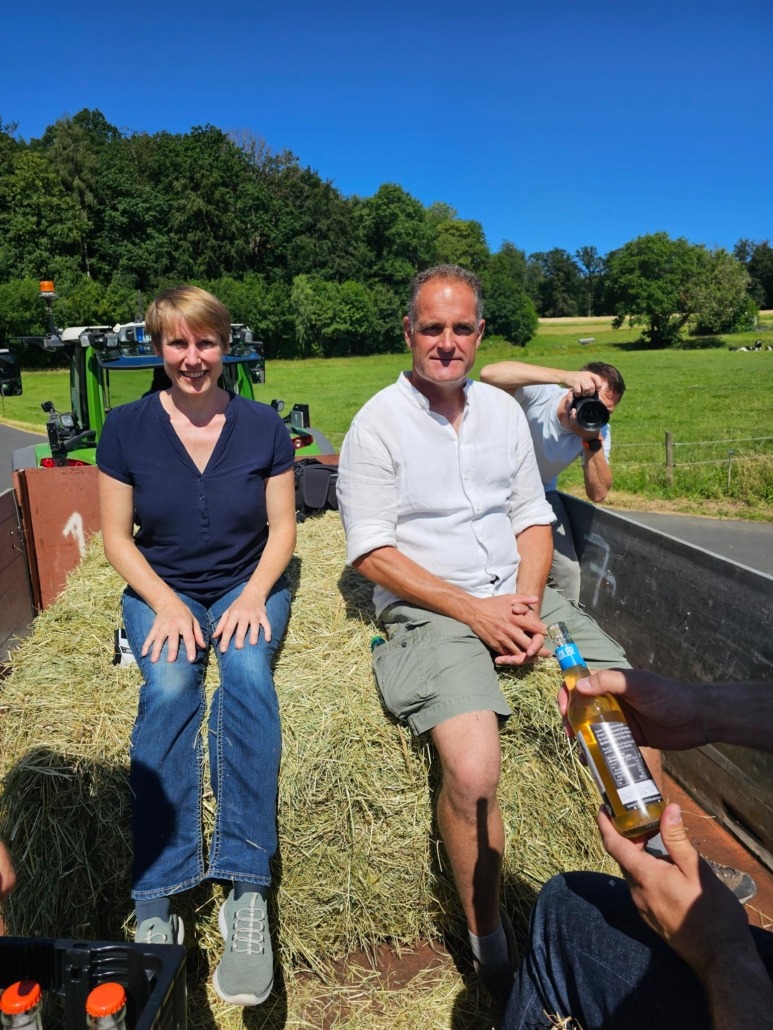
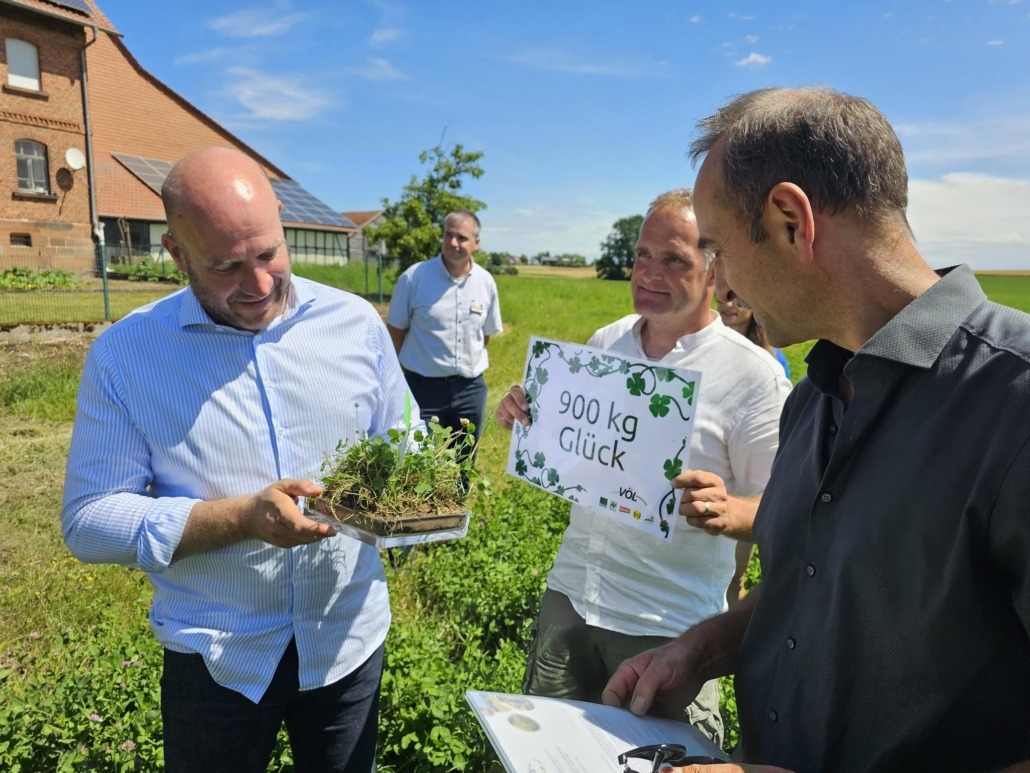
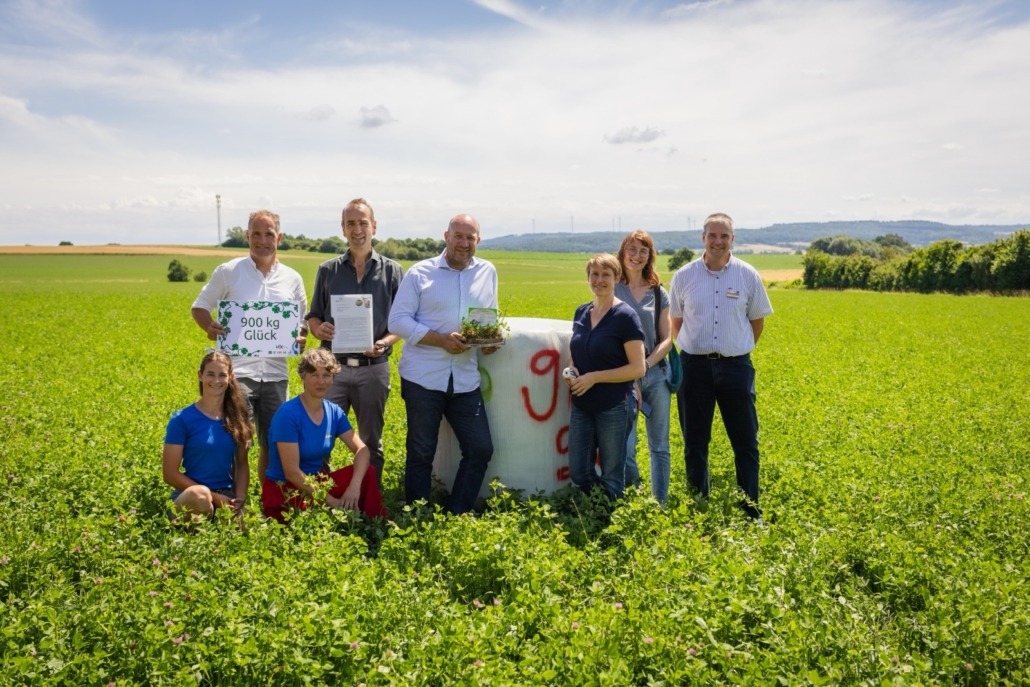
At the end of the visit, a special good-luck charm awaited the minister: a bale of clover grass bearing the inscription “900 kg of luck.”
Peter Arndt conveyed a clear message: “Clover-grass cultivation is a real boon for the soil and agriculture. In the interest of all residents of Hesse, more of it should be grown. We’re counting on your support!”
The clover-grass bale symbolizes what organic farming and applied research can achieve together: fertile soils, regional cycles, resilient farms, and solutions that benefit both agriculture and society.
For these approaches to have a broad impact, we need committed businesses, strong collaboration between practitioners, consultants, and researchers—and policymakers who reliably support this path.