Retain nitrogen and supply the subsequent crop
September 24, 2026 | EVENT
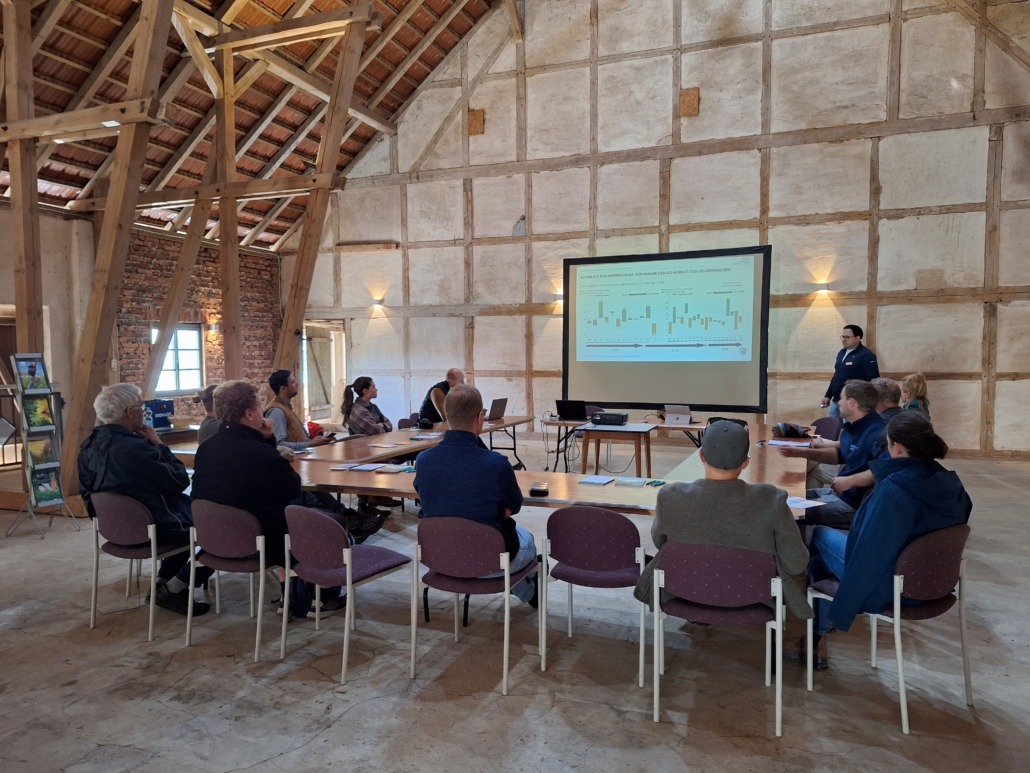
How can nitrogen from cover crops remain available for the subsequent crop, and how can losses be reduced? Findings from our “Umkreis” project provide important insights on this topic. Reinhard Schmidt from the Hessian State Agricultural Service (LLH) presented these findings at the Cover Crop Field Day on September 24, 2026, at the Hessian State Estate in Immichenhain.
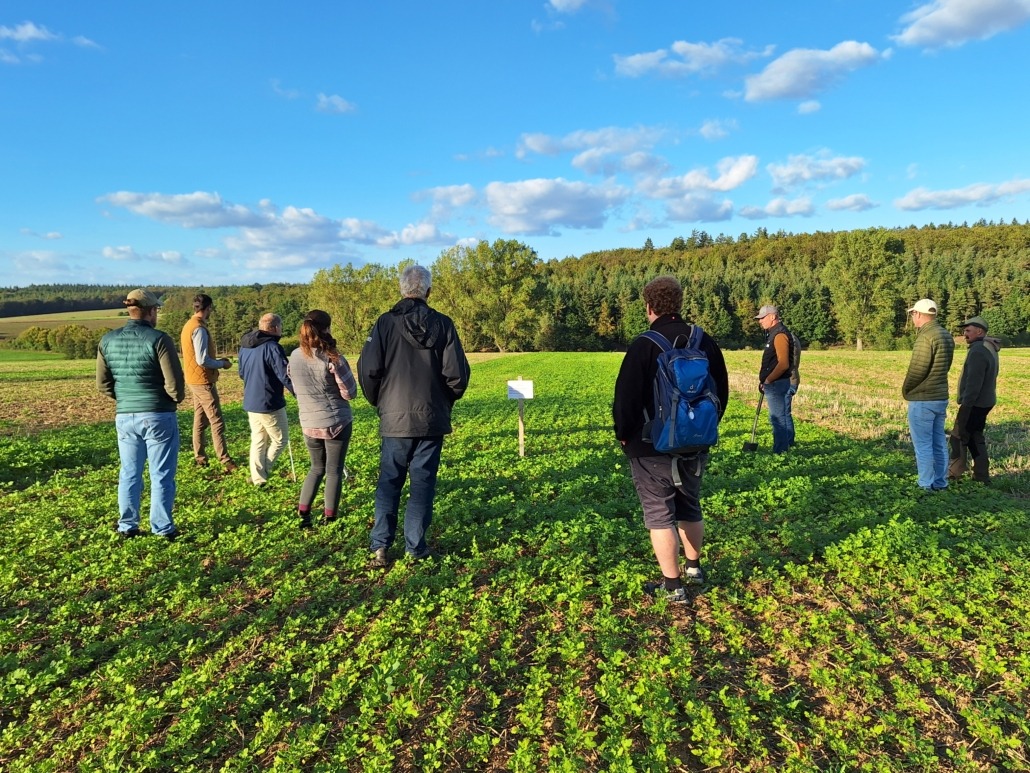
Together with the LLH and farm manager Christoph Riebeling, we—as the Hesse Practical Research Network (PFN)—hosted the field day. Technical presentations followed by a field tour combined research findings with real-world agricultural experience.
Rotation: Ensuring Nitrogen for the Next Crop
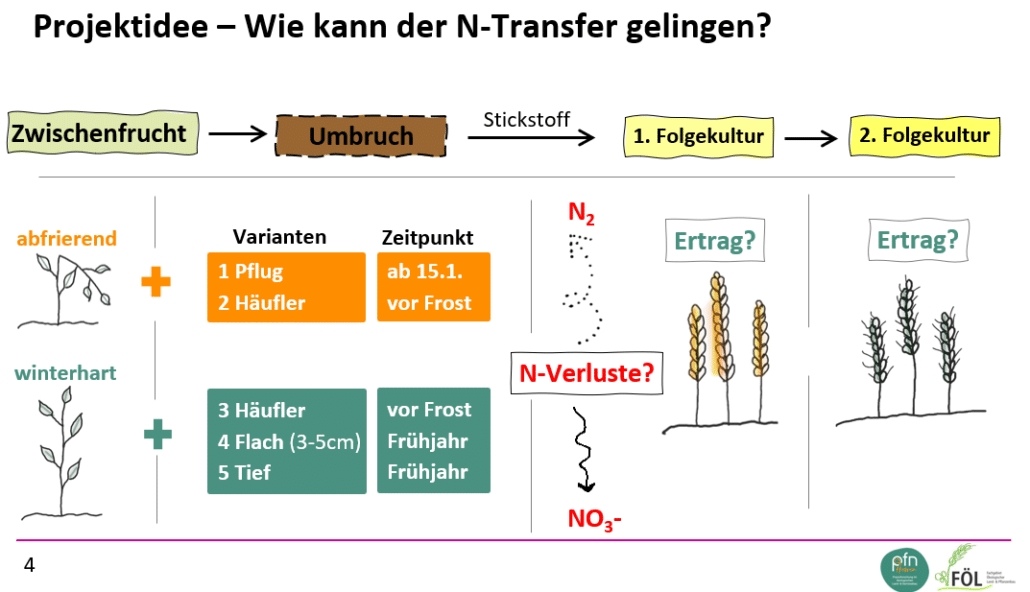
In our “Umkreis” project, various cover crop and plowing options were studied on organic farms in Hesse and at the University of Kassel’s experimental farm. The focus was on how the nitrogen fixed by cover crops can be preserved and made available for the subsequent crop.
The results presented highlighted the importance of the interaction between cover crops, site conditions, and the timing of plowing. Crops plowed under early in the season that freeze off can release nitrogen more quickly; however, this also increases the risk of loss. Winter-hardy cover crops retain nitrogen for longer. Their plowing, in turn, must be planned so that the nitrogen becomes available in time for the subsequent crop.
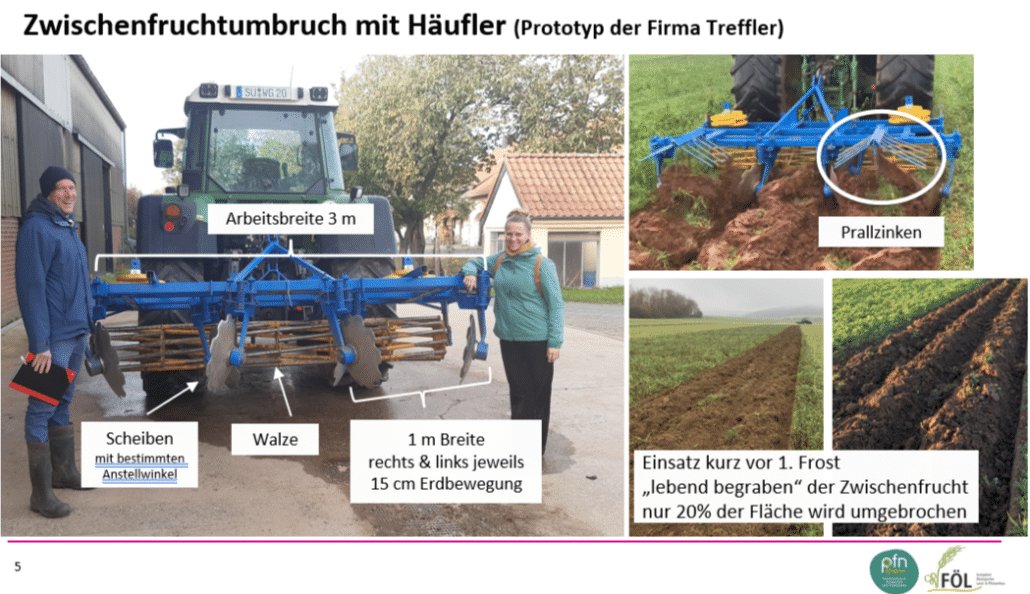
A key focus of the presentation was the “Treffler Häufler” as a soil-conserving tillage method. In this method, the cover crop is rolled before the first frost and then covered with turned-over soil. Since only part of the area is tilled, the impact on the soil is less than with plowing. According to the results presented, when carried out at the appropriate time, this method can provide a similar amount of nitrogen for the subsequent crop as plowing does.
In practice, therefore, it is important to coordinate the choice of cover crop, the timing of plowing, and the tillage method. This allows farms to improve the nitrogen supply for the subsequent crop and reduce the risk of nutrient loss.
Further Perspectives on Cover Crop Cultivation
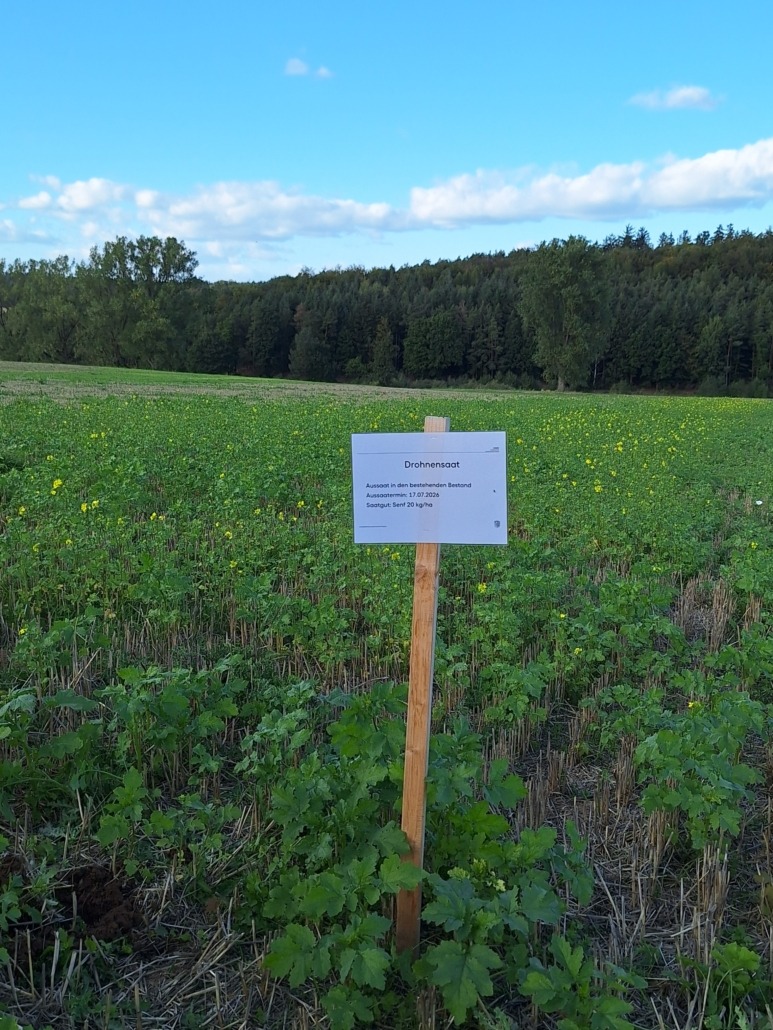
Axel Vorwald from the LLH Organic Farming Advisory Team reported on several years of practical demonstrations of drone seeding in North and East Hesse. His colleague Friederike Kaplan presented a decision matrix for drone seeding . This matrix helps farms assess whether the method is suitable for their specific conditions. Factors considered include soil and germination conditions, straw distribution, suitable seed, perennial weeds, and the ability to flexibly adjust the sowing date to the weather. The matrix distinguishes between exclusion criteria and factors that need to be weighed according to the individual farm’s situation.
Andreas Werner from Deutsche Saatveredelung AG explained, based on results from the CATCHY project , what contribution cover crops can make to soil structure and soil fertility.
Comparing Field Seeding Methods
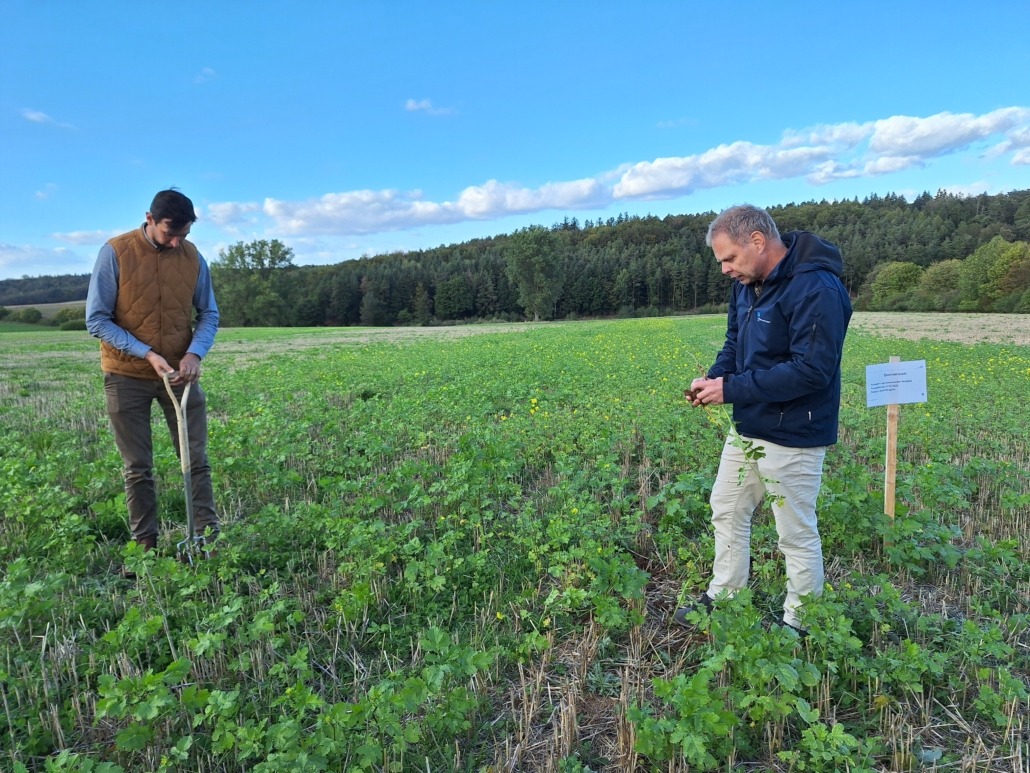
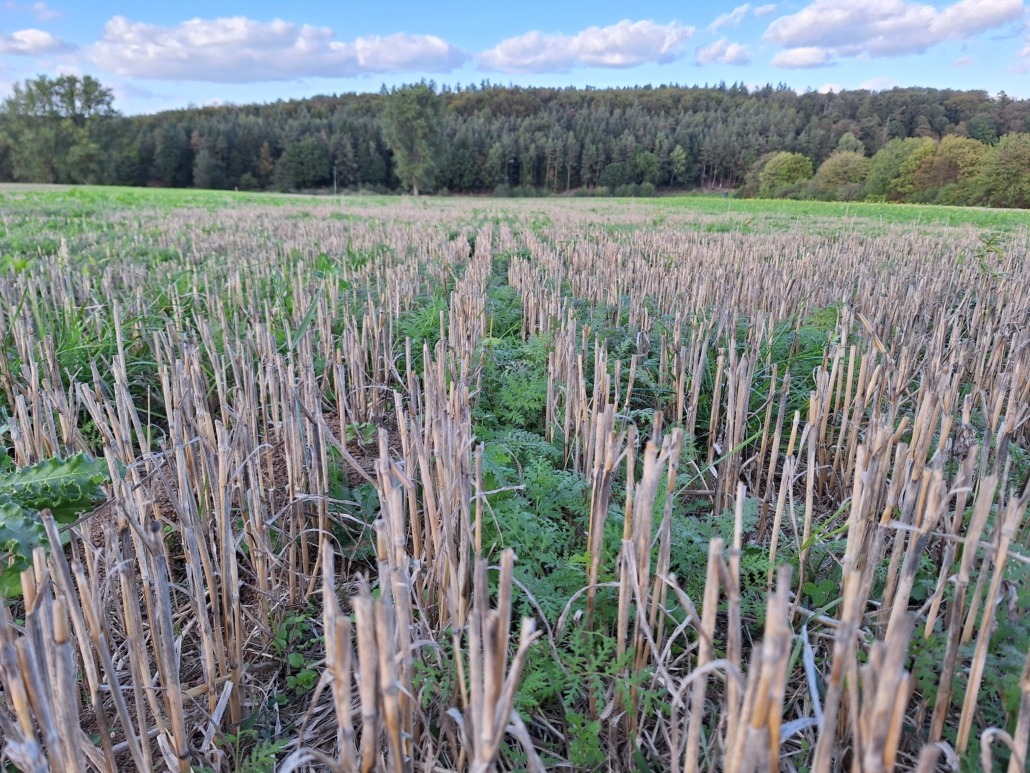
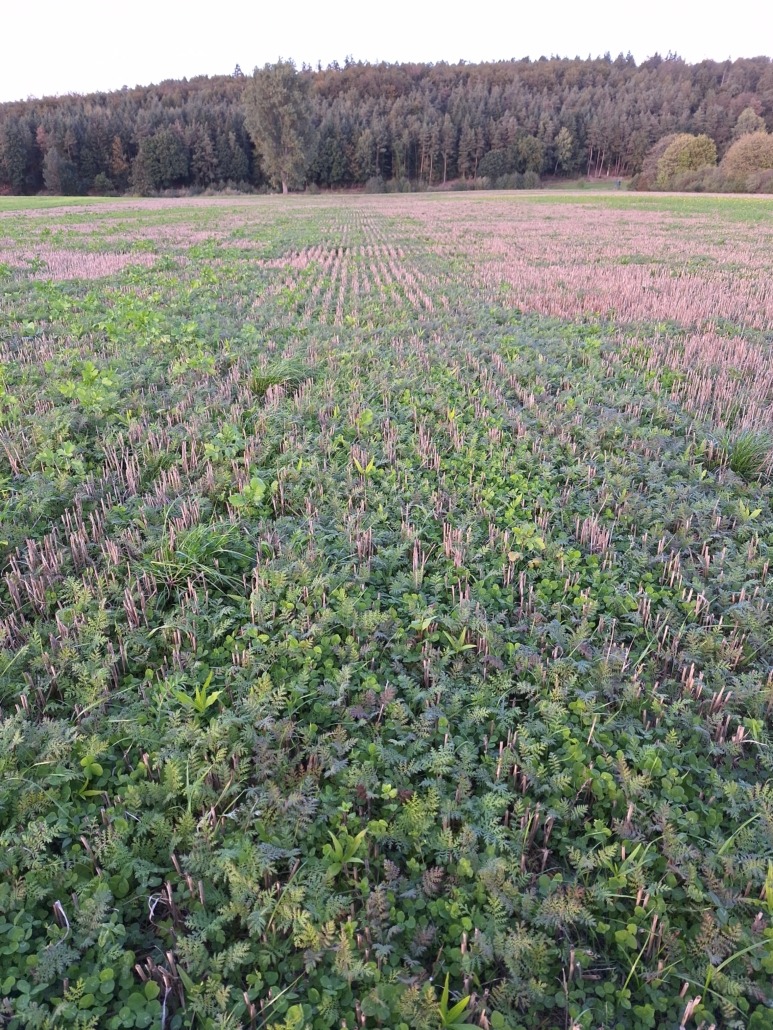
During the subsequent field tour, participants were able to compare various cover crop stands resulting from drill seeding, broadcast seeding, and drone seeding. The dry and hot weather had limited the development of the stands. Under the conditions of the demonstration plot, drill seeding proved to be the most reliable method, but also the most cost-intensive.
The differences clearly demonstrated how strongly crop development depends on seeding methods, plant species, and site conditions. The nutrient supply for the cover crops must also be taken into account to ensure that high-yielding stands can develop.
Practical research thrives on exchange
At the field day, we presented insights from our network for discussion and linked them to experiences from consulting and on-the-ground farming practices. This exchange, taking place directly in the field, helps contextualize research findings and discuss their significance for different farms.
In this way, practical research supports informed decisions in day-to-day farm operations. The goal is to use cover crops in a way that retains nutrients in the system, protects water bodies, and maintains soil fertility in the long term.
Further information on the technical presentations and the comparison of seeding methods is available in the LLH’s detailed event report.