Ideas for Climate-Adapted Vegetable Farming
September 30, 2026 | EVENT
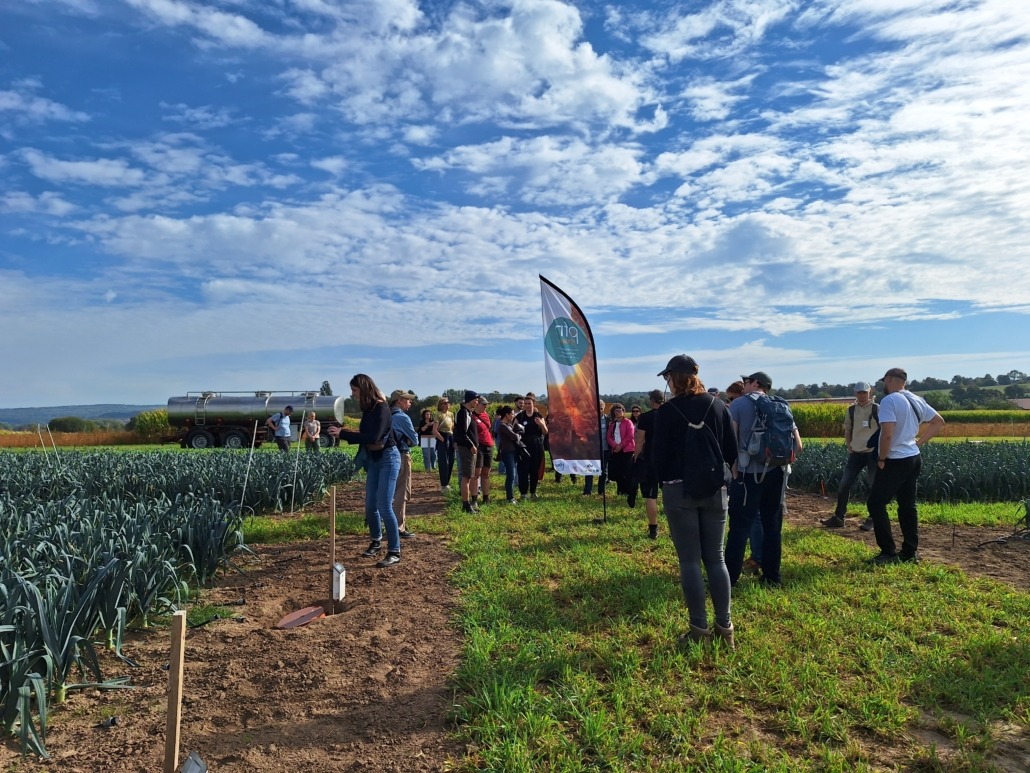
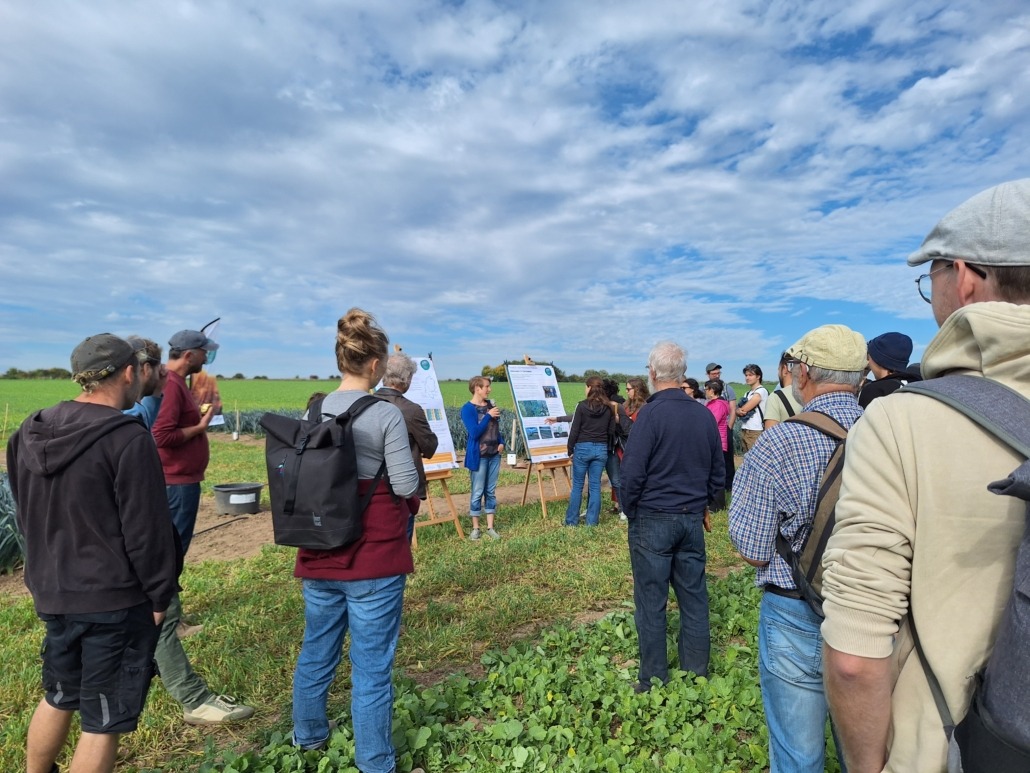
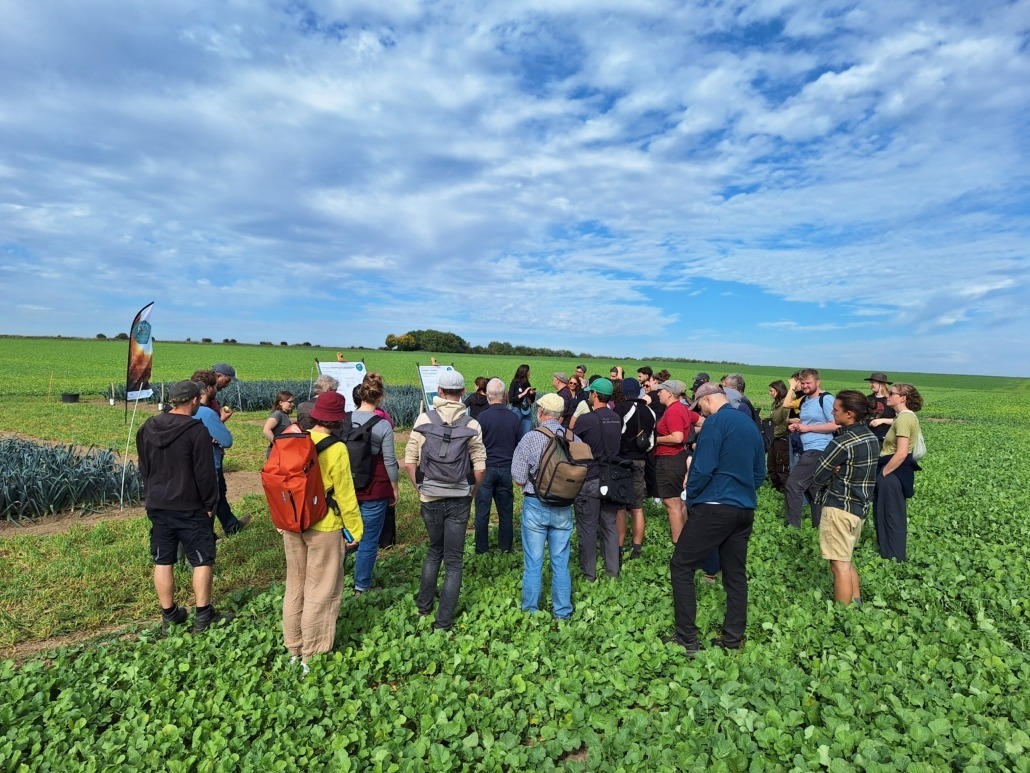
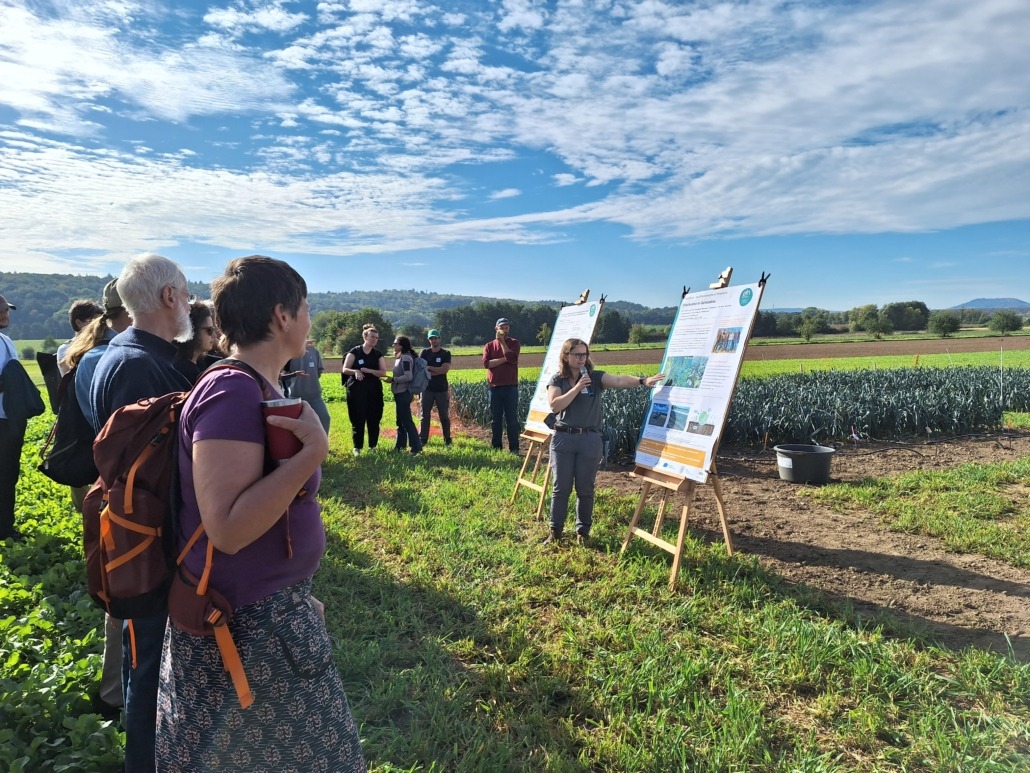
On September 30, 2026, PFN Hessen participated in the field day “Climate Adaptation in Organic Vegetable Farming” at the Frankenhausen Estate. Two projects from our network— Ground2Live and ÖkoBoden4Resilienz —were presented. At the same time, the event offered an opportunity to learn about other research approaches and to discuss their significance for vegetable farming with practitioners, consultants, and researchers.
Various stations addressed questions that are also of concern to us at PFN Hessen: How can we retain more water in the soil? What possibilities do cover crops and mulch offer? And how can resilient varieties contribute to climate adaptation?
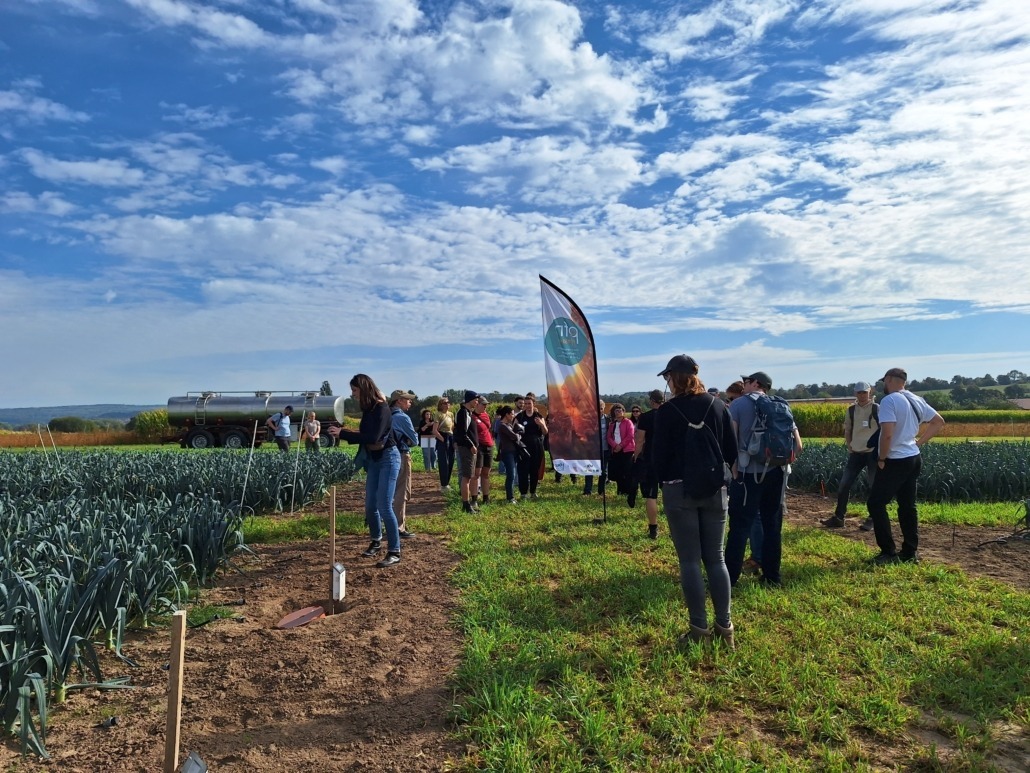
Our field research on cover crops and compost
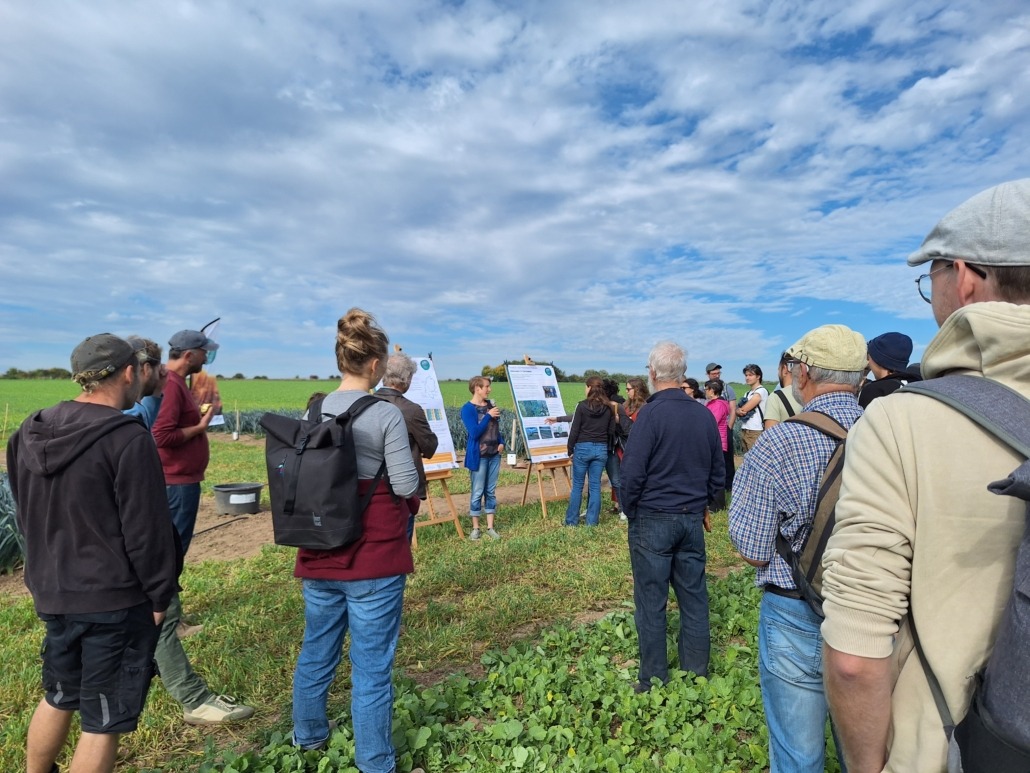
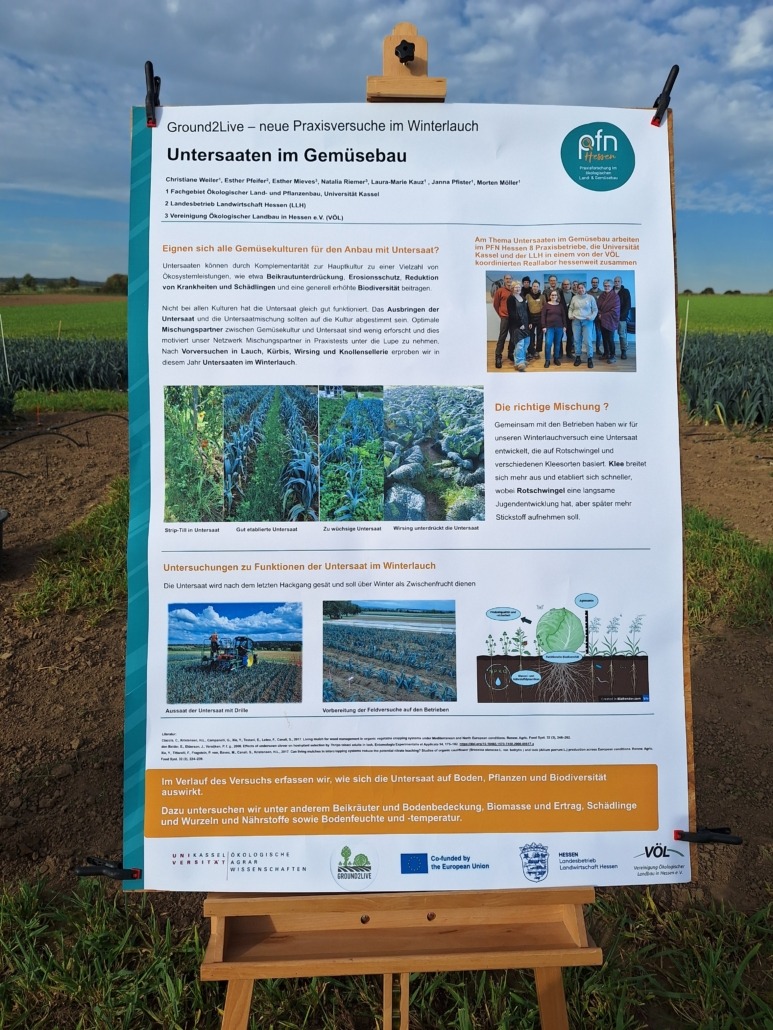
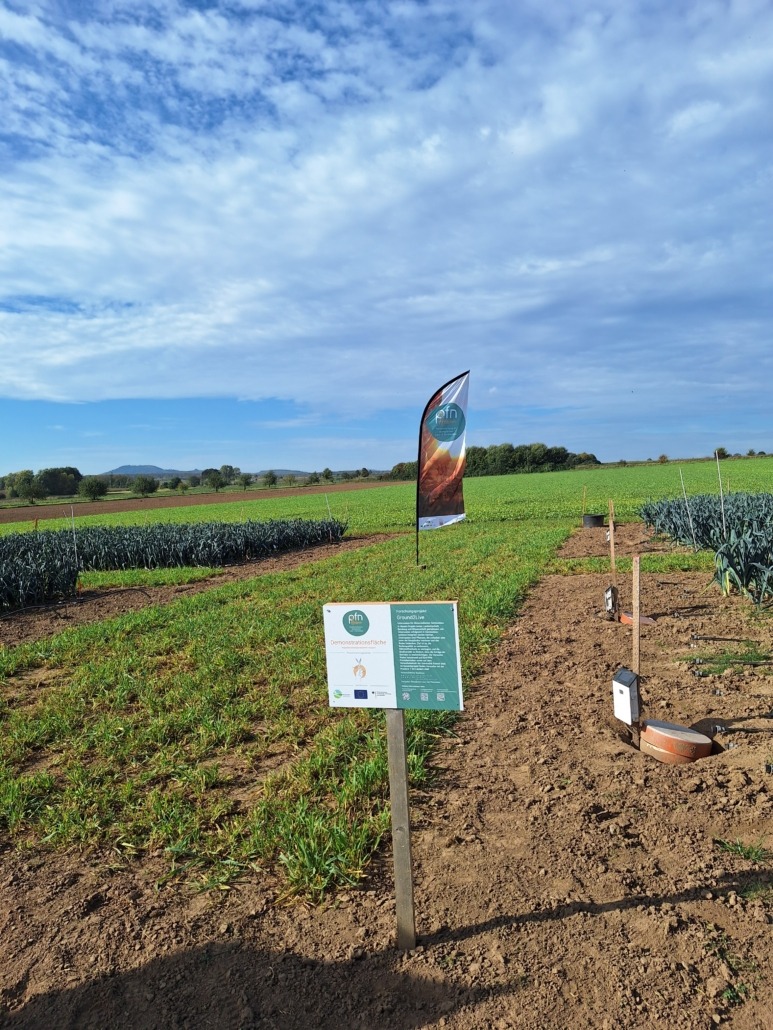
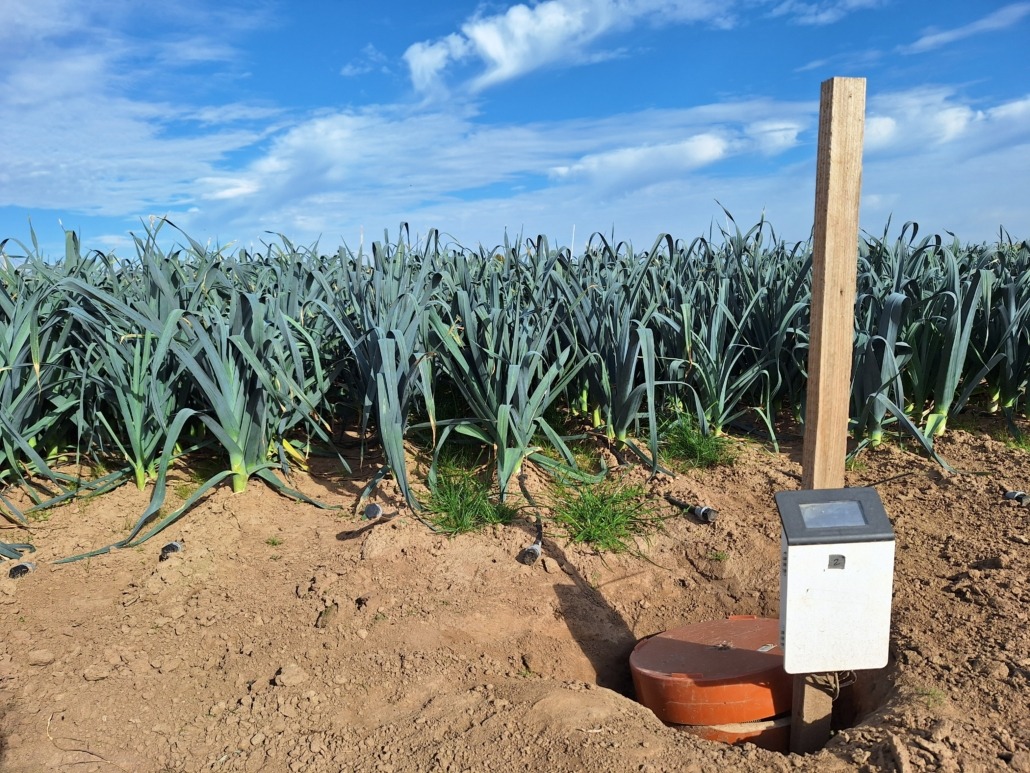
At the Ground2Live trial, the focus was on an approach that we at PFN Hessen are investigating together with eight vegetable farms: intercropping in winter leeks. The goal is to improve soil quality, biodiversity, and nutrient efficiency. At the test site, we were able to demonstrate the research approach directly on the standing crop and discuss questions about it.
An important question in this context is how cover crops can be reconciled with the requirements of vegetable cultivation. During the growing season, they should cause as little competition as possible; after harvest, however, they should quickly cover the soil. To assess their development and effectiveness, factors such as soil cover, weed growth, biomass, and yields are monitored. This should reveal which approaches are suitable for practical application under different conditions.
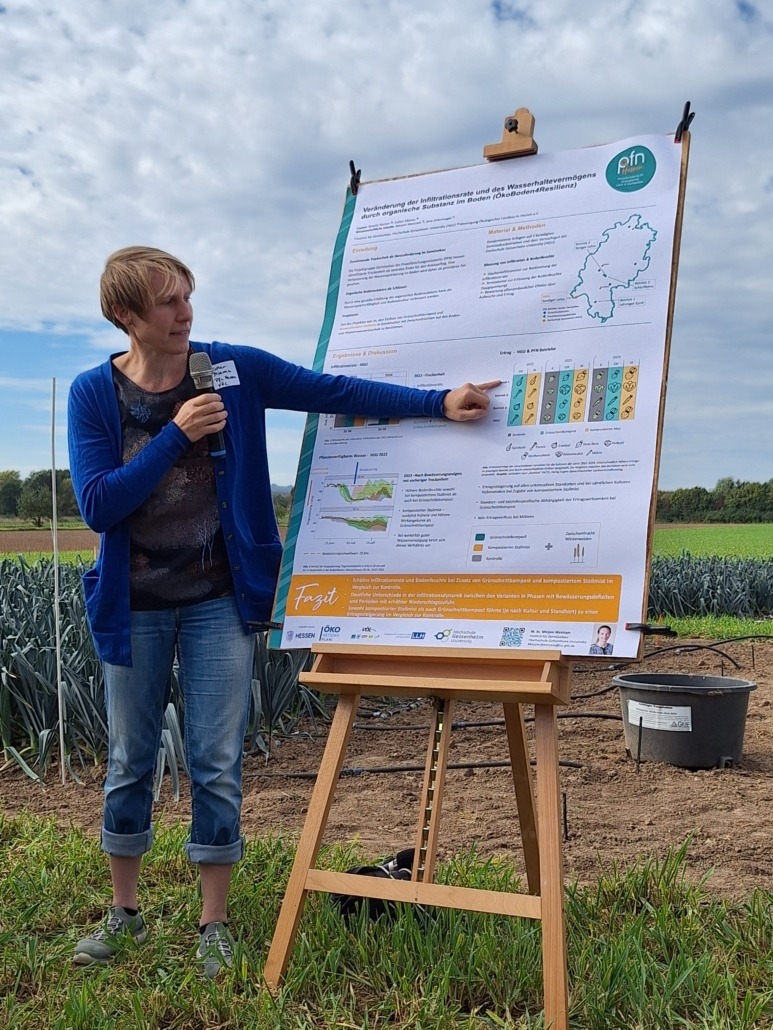
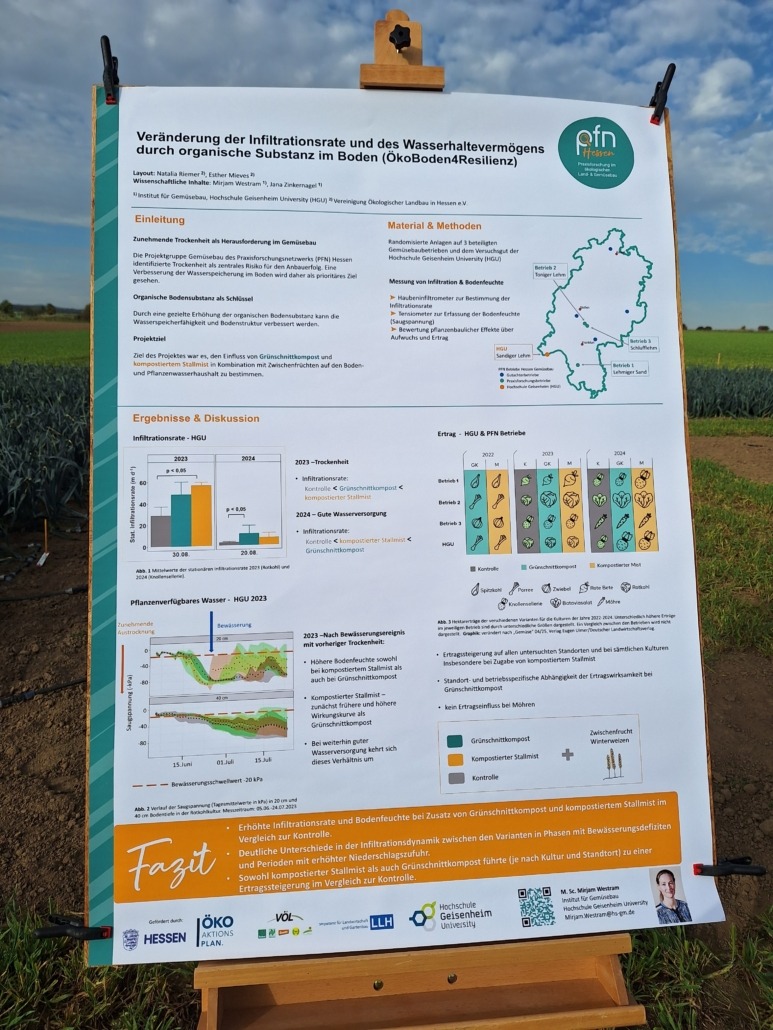
In addition, we presented our completed project, ÖkoBoden4Resilienz. From 2022 to 2025, in collaboration with vegetable farms, we were able to demonstrate how compost made from green waste and manure, in combination with cover crops, improved the soil’s water absorption and water-holding capacity as well as the yields of various vegetable crops.
The starting point was a challenge that the participating farms themselves had identified as particularly urgent: coping with increasing drought. The central question was how building up organic soil matter could improve water availability for the plants. To this end, trials were conducted on three commercial farms and at the Geisenheim University experimental farm.
Both projects thus address issues that arise directly from day-to-day business operations. For us, the field day was an opportunity to present this work and connect it with other approaches to climate adaptation.
Different Approaches to Better Water Management
How can water be used more effectively and retained in the soil in vegetable production? HydroSoilWise investigates how cover crops and reduced tillage can promote soil organic matter and water storage. ROBUSTGemüse, on the other hand, focuses on various mulch materials and their effects on water and nutrient efficiency as well as soil protection. ADAPT examines the interaction between soil, plants, and water under climate stress. These different approaches offer interesting points of reference for applied research.
Hardy Varieties and Healthy Plants
How can vegetable varieties be made more resilient and better equipped to cope with climate change? Various research projects are addressing this question: ALTOKA is breeding Alternaria-tolerant carrots, ZUG is developing resistant squash rootstocks for cucumbers, and OekoTom is researching hardy open-field tomatoes. “Bio-Klima-Gemüse” broadens the perspective on climate-friendly cultivation, consumption, and regional value chains. The projects highlighted various approaches that can support the adaptation of organic vegetable farming to changing climatic conditions.
Exploring Research Questions Together
For our work at PFN Hessen, the field day provided an opportunity to connect our own project approaches with other research efforts and to discuss them with people from the fields of practice, consulting, and research. The on-site experiments illustrated various starting points for climate adaptation.
We would like to thank all participants for sharing insights into their work and for the exchange of ideas at the Frankenhausen Estate.