How can vegetable farming become more climate-resilient?
September 17, 2026 | EVENT
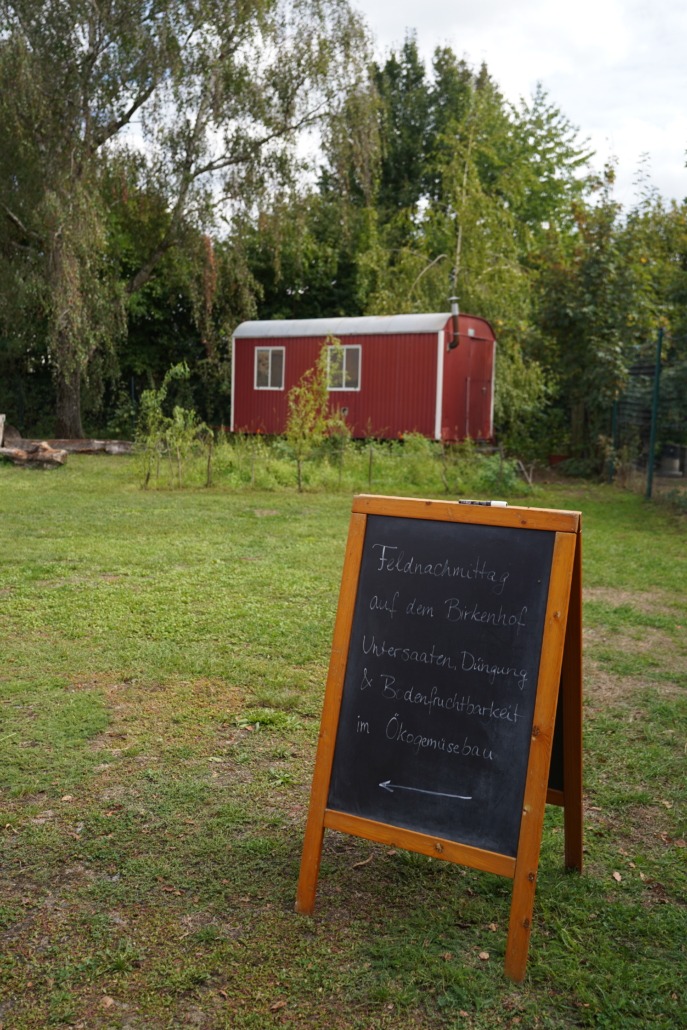
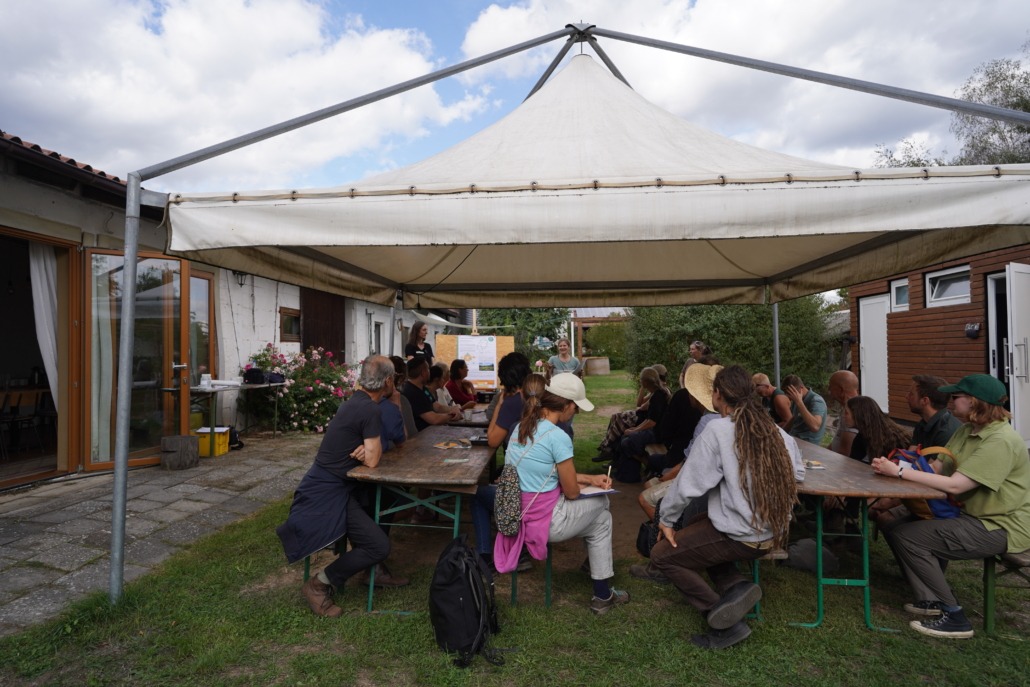
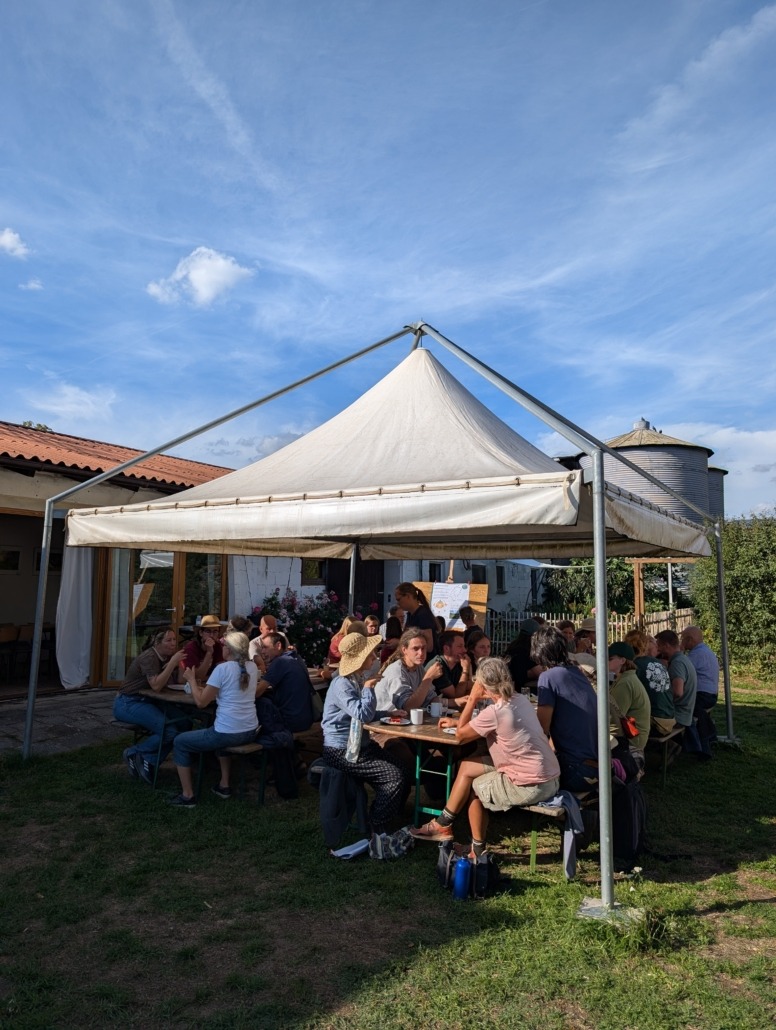
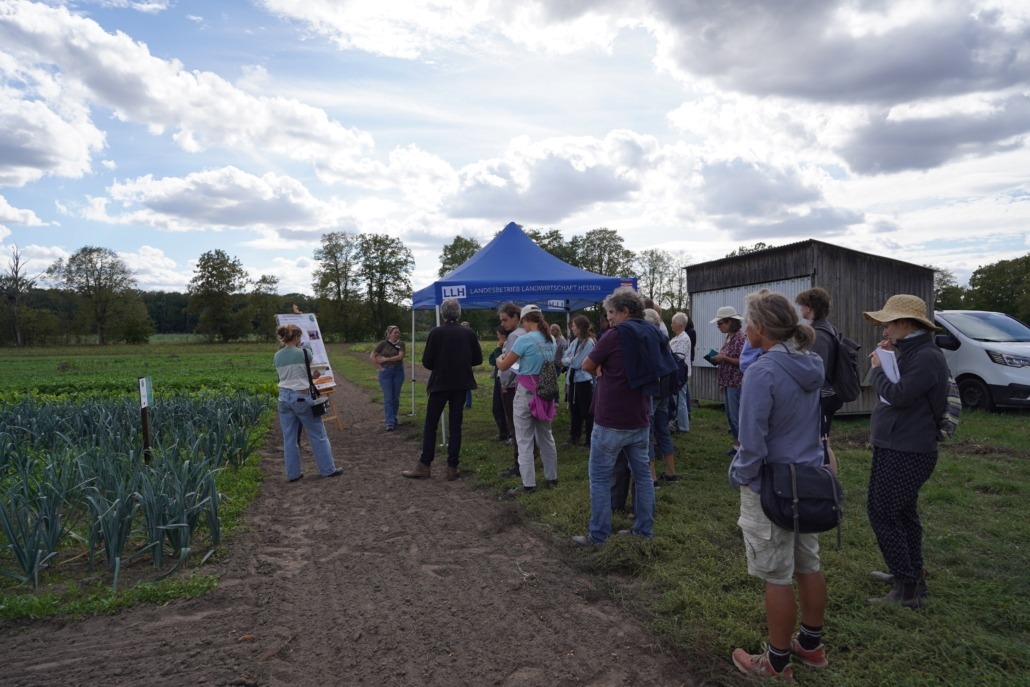
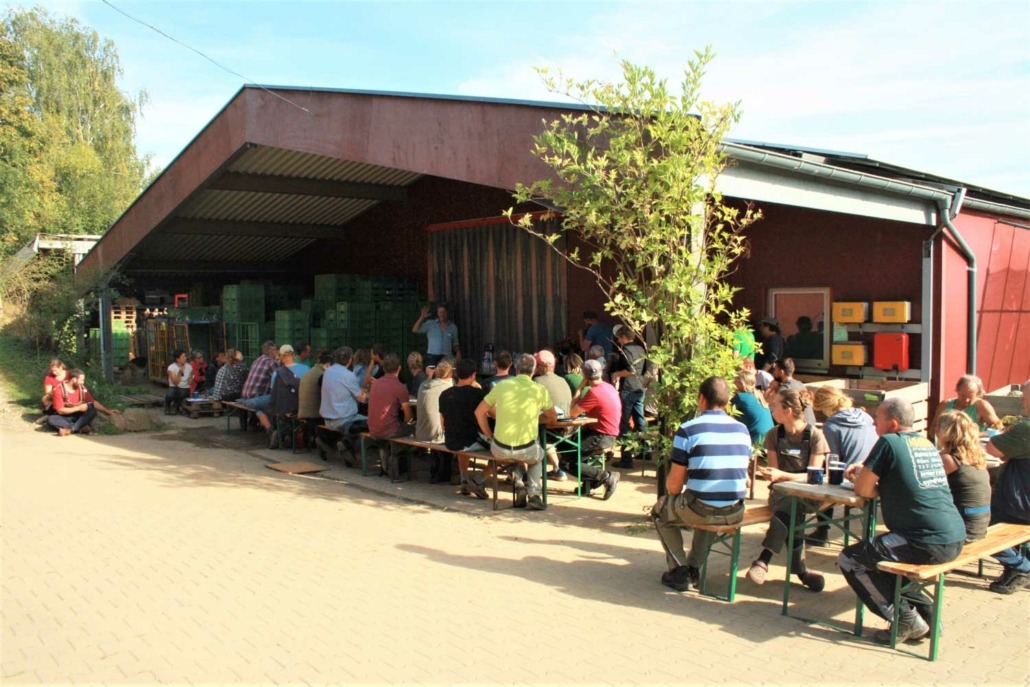
How can cover crops, adapted nutrient management, and the promotion of soil life contribute to climate-resilient vegetable farming? At the field day on September 17, 2026, at the Birkenhof in Egelsbach, approximately 35 participants gained insights into the European applied research project Ground2Live as well as into various areas of work and approaches in vegetable farming.
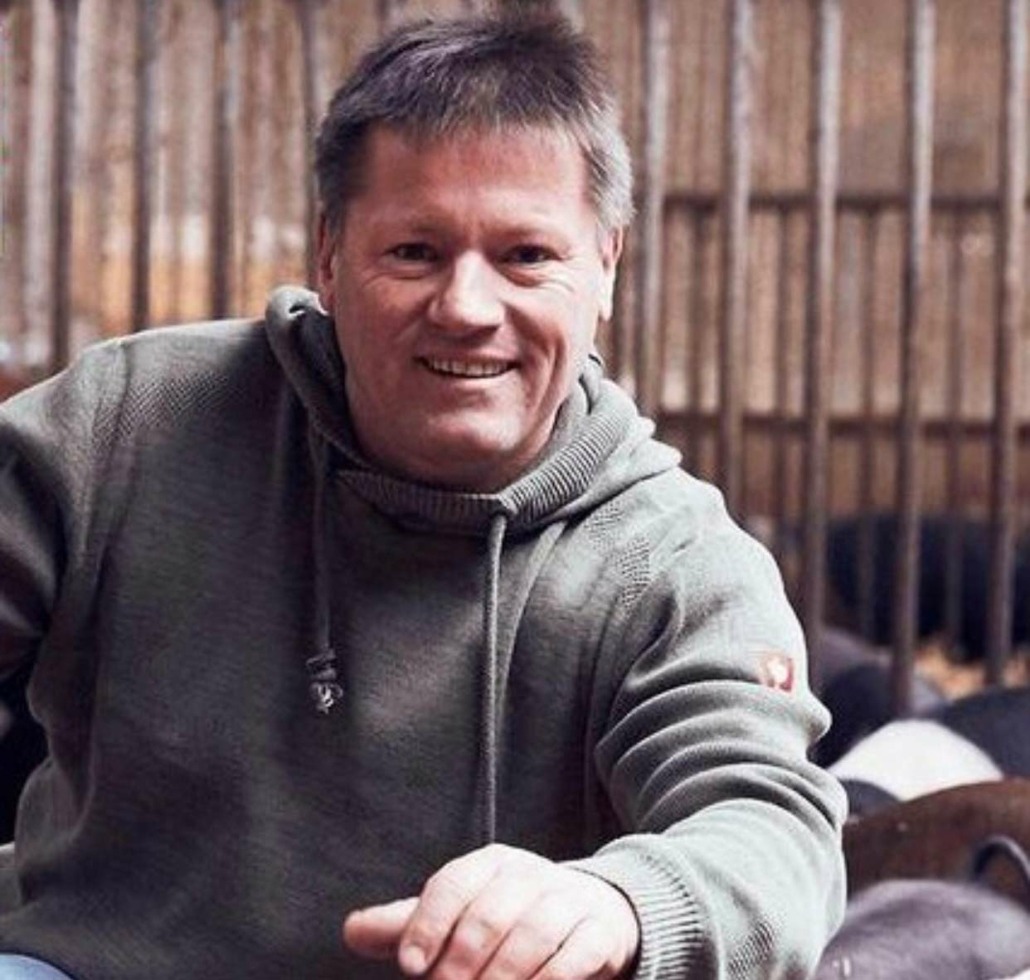
The Practice Research Network Hesse (PFN), the Hesse State Agricultural Agency (LLH), and the Hesse Vegetable Growing Initiative, together with Arno Eckert from Birkenhof, hosted the field afternoon. Esther Pfeifer from the LLH Advisory Service and Arno Eckert led the afternoon’s activities.
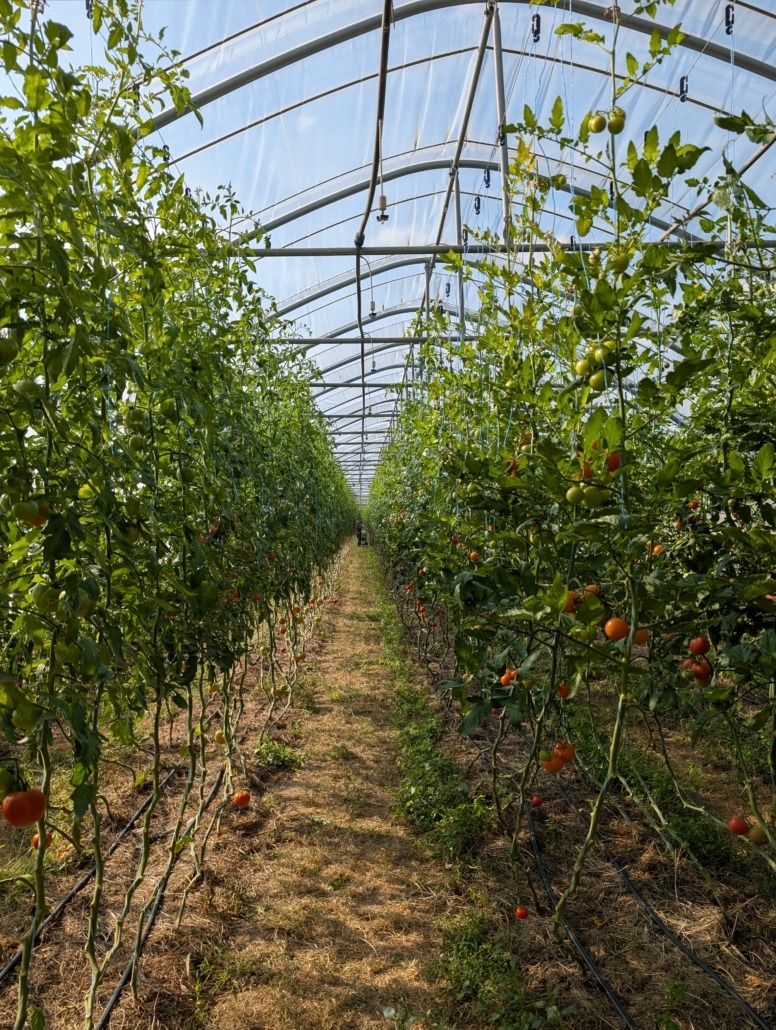
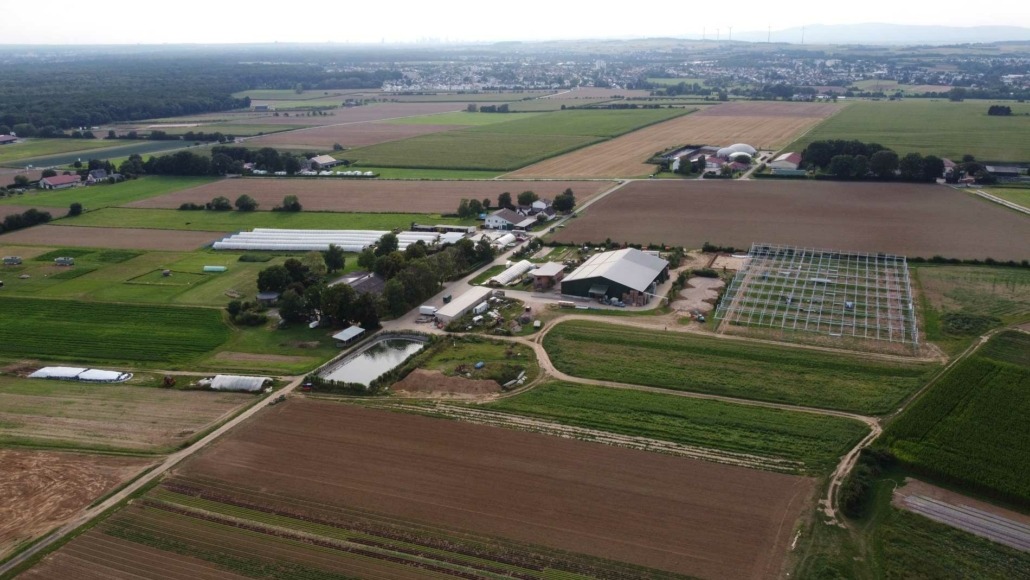
The Bioland farm cultivates approximately 80 hectares, of which about 4.5 hectares are dedicated to vegetable production, including protected cultivation. Since 2013, the produce has been sold primarily through a community-supported agriculture (CSA) program, which currently has 170 shares.
Ground2Live: Cover Crops for Climate-Resilient Vegetable Farming
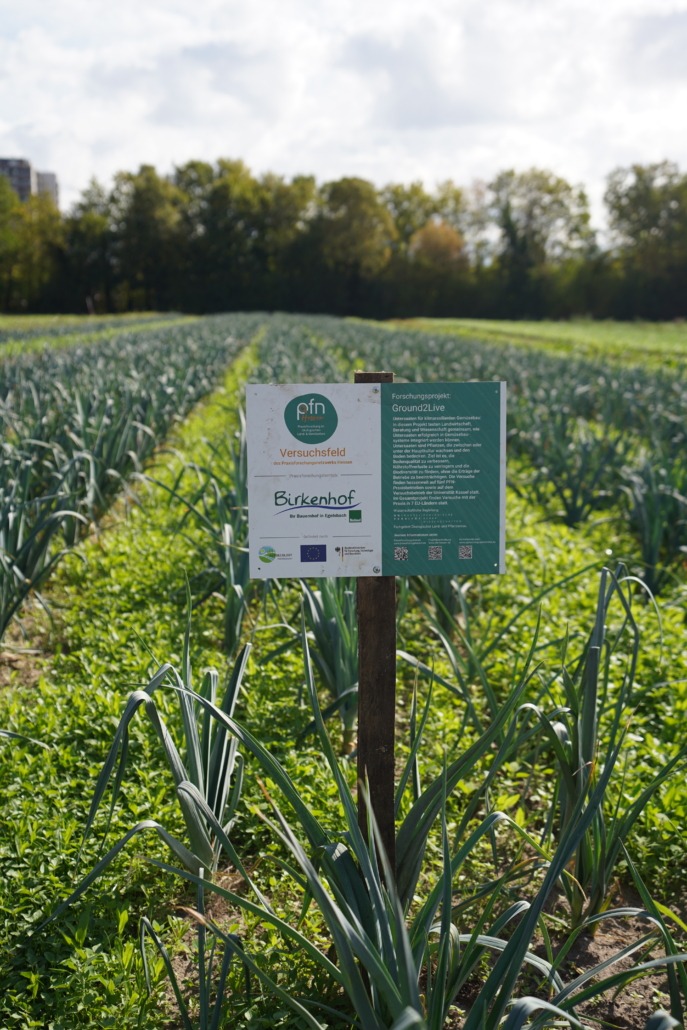
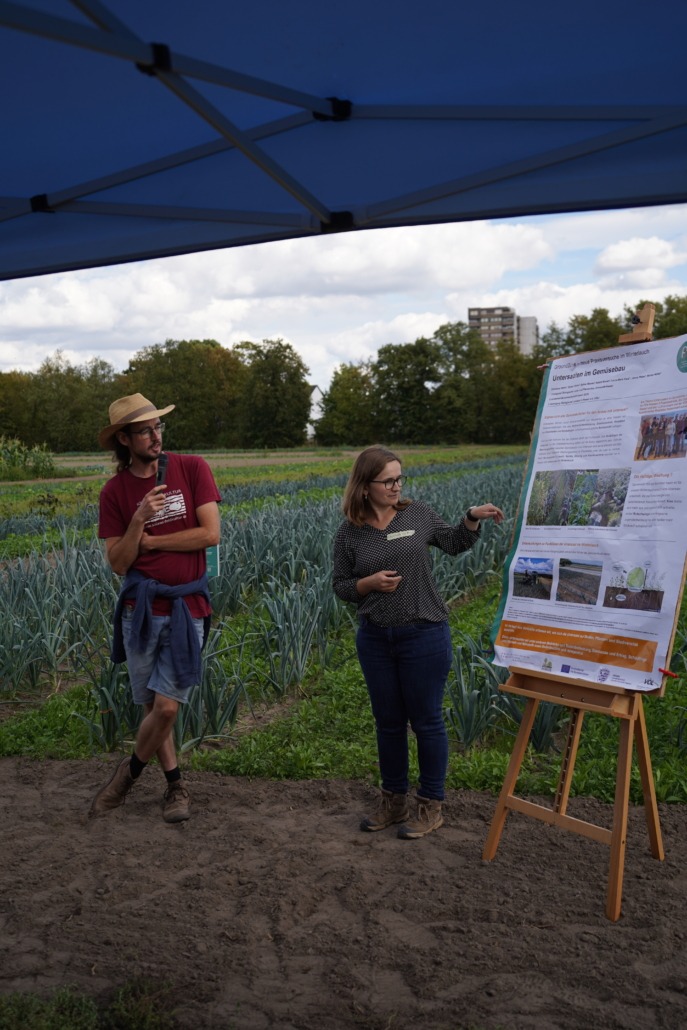
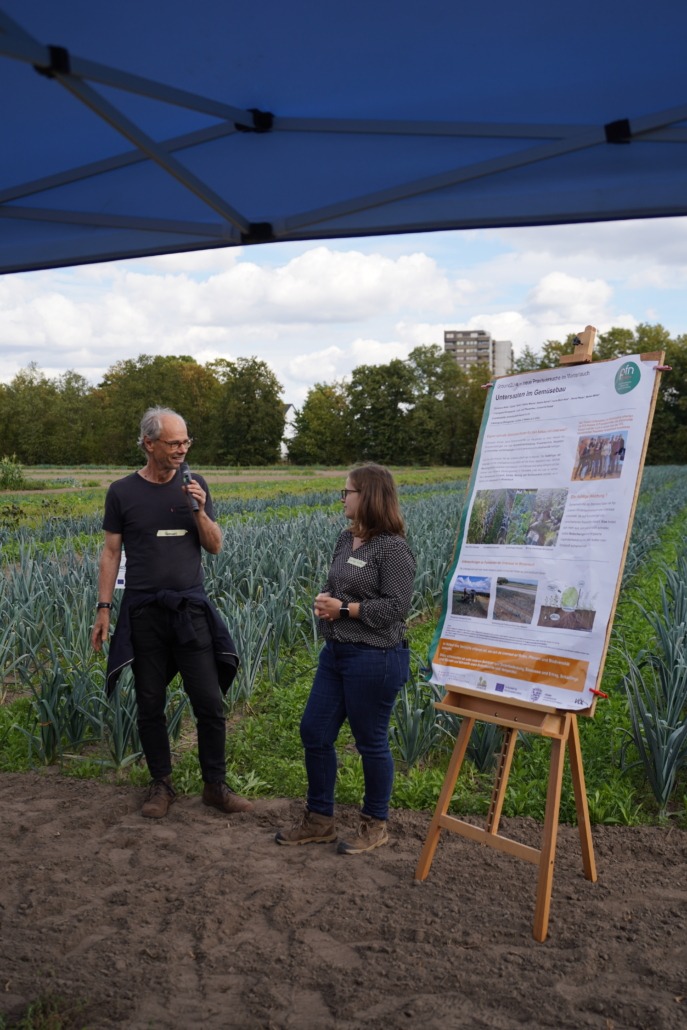
One of the highlights of the field afternoon was the European applied research project Ground2Live. Dr. Christiane Weiler from the University of Kassel presented the project and, together with the participating farms, demonstrated the ongoing trials directly on the test plot.
The goal of Ground2Live is to work with practitioners, researchers, and consultants to develop solutions for climate-resilient and sustainable vegetable farming. The project is investigating how cover crops can be effectively integrated into existing vegetable farming systems. Among other things, they can protect the soil from erosion and promote biodiversity.
To assess the development and impact of undersown crops, various factors are recorded. These include weed development, soil cover, biomass and yields, as well as pests, root growth, and different soil parameters. The results should provide insights into which mixtures are suitable under different conditions and how they can be used in practice.
The key is to coordinate the undersown crop with the main crop: during its development, the undersown crop should remain subdued and cause as little competition as possible. After harvest, however, it should quickly cover the area.
Winter Leeks and Undersowing: A Field Test
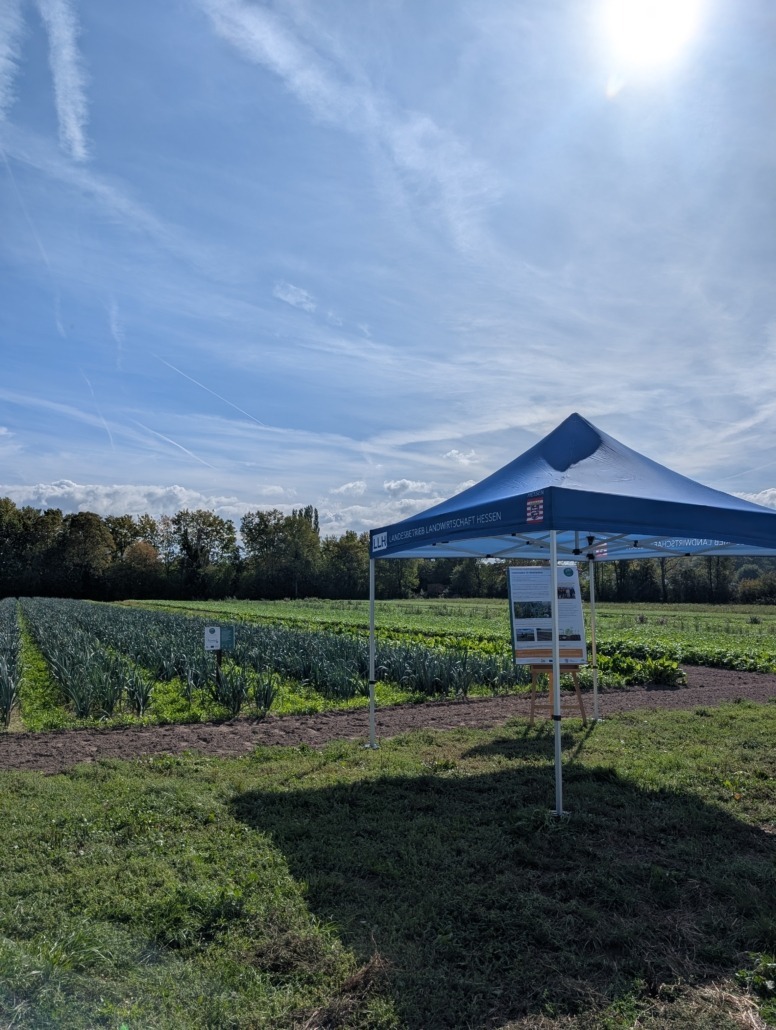
At Birkenhof, winter leeks are grown alongside a mixture of red fescue and various clover species. The cold-hardy mixture is sown after the final weeding, establishes itself between the rows of leeks, and is intended to cover the ground over the winter after the harvest.
In addition to Birkenhof, five other demonstration farms with test plots are participating in Ground2Live. Other farms are testing undersowing under their respective conditions.
During the field afternoon, farmers from the Solidarische Landwirtschaften Feldkultur and Maingrün farms, as well as from Luisenhof, reported on their experiences with undersowing to date. It became clear how differently cover crops can develop depending on location, weather, and farm management practices. The experiences and exchange of ideas among the participating farms are therefore an important part of the project.
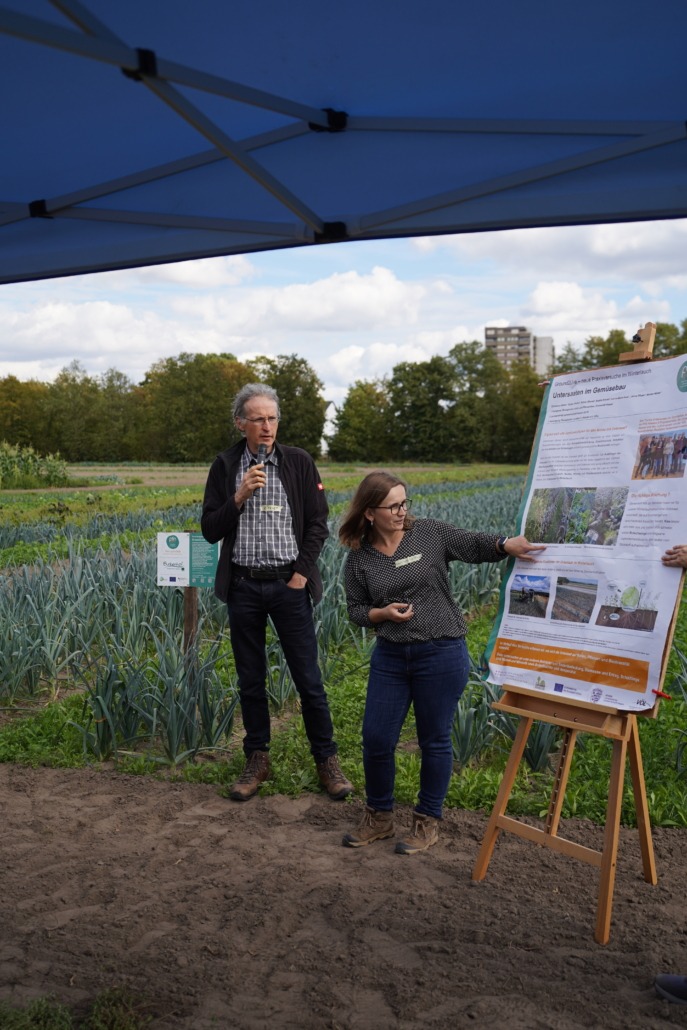
Exchange of Ideas on Practice, Research, and Consulting
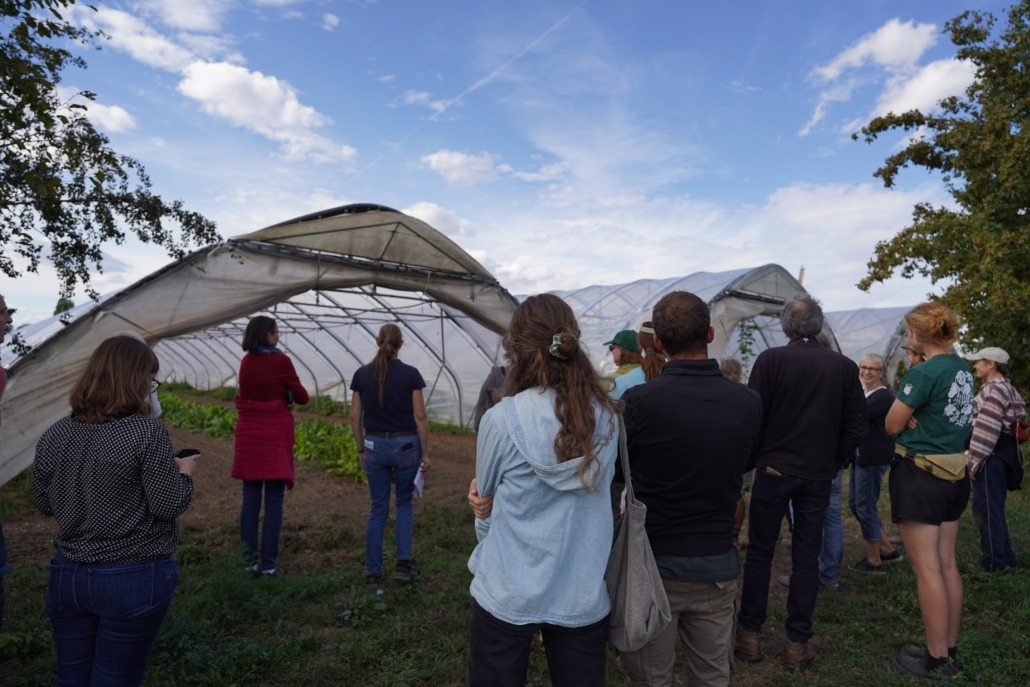
The field afternoon combined work on the Ground2Live project with further insights into the management of the Birkenhof farm. The rest of the field afternoon’s program included insights into farm-specific applications such as Nmin analysis with the NitraCheck, the production of compost tea, and the use of Effective Microorganisms. Participants were able to get a firsthand look at the various approaches right on the experimental plots, discuss questions, and share their own experiences.
The intercropping trials, in particular, demonstrated how innovative approaches can be developed collaboratively by practitioners, researchers, and extension specialists and tested under real-world conditions. At the same time, the other program items made it clear that climate resilience in vegetable farming must be considered from various perspectives: from soil cover to an adapted nutrient supply to the promotion of soil life.
Thus, the afternoon field session provided a wealth of insights into how applied research and the shared exchange of experiences can contribute to the further development of sustainable and climate-resilient vegetable production.

More news from our network


PFN-Hessen-Praxisforschungsnetzwerk-Logo
Hessenmarke_HMUKLV_3-zeilig_oben

PFN-Hessen-Praxisforschungsnetzwerk-Logo-Oeko-Aktionsplan
PFN-Hessen-Praxisforschungsnetzwerk-Logo-Voel

PFN-Hessen-Praxisforschungsnetzwerk-erleben-forschen-verstehen
PFN-Hessen-Praxisforschungsnetzwerk-Oekofeldtage_sm
PFN-Hessen-Practical Research Network-Locations-Graphic

PFN-Hessen-Praxisforschungsnetzwerk-entdeckungshungrig

PFN-Hessen-Praxisforschungsnetzwerk-Ideen-Moeglichkeiten

PFN-Hessen-Praxisforschungsnetzwerk-Treckerlabor
PFN-Hessen-Praxisforschungsnetzwerk-Aktuelles-Kick-off_sm
PFN-Hessen-Praxisforschungsnetzwerk-Korn_sm
PFN-Hessen-Praxisforschungsnetzwerk-Struktur-des-Netzwerks_sm

PFN-Hessen-Praxisforschungsnetzwerk-Logo-Hochschule-Geisenheim

PFN-Hessen-Praxisforschungsnetzwerk-Logo-LLH

PFN-Hessen-Praxisforschungsnetzwerk-Logo-Universitaet-Giessen

PFN-Hessen-Practice-Research-Network-Logo-University-of-Kassel

PFN-Hessen-Praxisforschungsnetzwerk-Logo-Voel
PFN-Hessen-Praxisforschungsnetzwerk-Bio-Ackelei

PFN-Hessen-Praxisforschungsnetzwerk-Logo-Ackelei
PFN-Hessen-Praxisforschungsnetzwerk-Zell_sn

PFN-Hessen-Praxisforschungsnetzwerk-Logo-Gut-Marienborn
PFN-Hessen-Praxisforschungsnetzwerk-Gut-Marienborn_sn